


Earliest recorded use of zero is centuries older than first thought, finds study
However, its origin has until now been one of the field’s greatest conundrums.
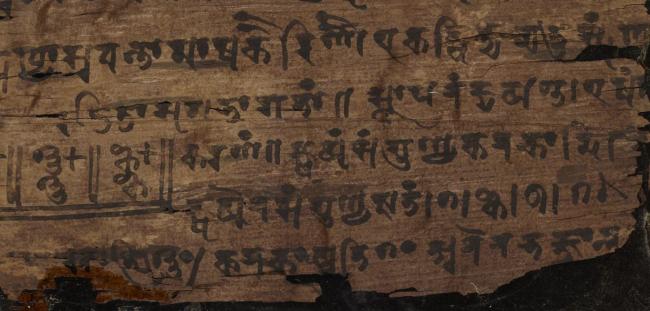
Scientists from the University of Oxford’s Bodleian Libraries, have used carbon dating to trace the figure’s origins to the famous ancient Indian scroll, the Bakhshali manuscript.
The text dates back to the third or fourth century, making it the oldest recorded use of the symbol.
The research was commissioned by Bodleian Libraries, where the manuscript has been held since 1902. The text was found to contain hundreds of zeroes, and the landmark finding puts the birth of ‘zero’ or ‘nought’ as it is also known, at 500 years earlier than scholars first thought.
The concept of the symbol as we know and use it today, began as a simple dot, which was widely used as a ‘placeholder’ to represent orders of magnitude in the ancient Indian numbers system – for example 10s, 100s and 1000s. It features prominently in the Bakhshali manuscript, which is widely acknowledged as the oldest Indian mathematical text, read the University of Oxford website.
The earliest recorded example of the use of zero was previously believed to be a 9th century inscription of the symbol on the wall of a temple in Gwalior, Madhya Pradesh. The study findings predate this event and therefore have great historical mathematical significance.
Although a number of ancient cultures including the ancient Mayans and Babylonians also used the zero placeholder, the dot’s use in the Bakhshali manuscript is the one that ultimately evolved into the symbol that we use today. India was also the place where the symbolic placeholder developed into a number in its own right, and the concept of the figure zero as it exists today, was born.
Marcus du Sautoy, Professor of Mathematics at the University of Oxford, said: ‘Today we take it for granted that the concept of zero is used across the globe and is a key building block of the digital world. But the creation of zero as a number in its own right, which evolved from the placeholder dot symbol found in the Bakhshali manuscript, was one of the greatest breakthroughs in the history of mathematics.
‘We now know that it was as early as the 3rd century that mathematicians in India planted the seed of the idea that would later become so fundamental to the modern world. The findings show how vibrant mathematics have been in the Indian sub-continent for centuries.’
The Bakhshali manuscript was found in 1881, buried in a field in what was then an Indian village called Bakhshali, now in Pakistan. It is broadly recognised as the oldest Indian mathematical text, however, the exact age of the text is widely contested.
The most conclusive academic study on the subject, was conducted by Japanese scholar Dr Hayashi Takao, and, based on factors such as the style of writing and the literary and mathematical content, it asserted that it probably dated from between the 8th and the 12th century.
The new carbon dating reveals that the reason why it was previously so difficult for scholars to pinpoint the Bakhshali manuscript’s date is because the manuscript, which consists of 70 fragile leaves of birch bark, is in fact composed of material from at least three different periods.
Richard Ovenden, Bodley’s Librarian, said: "Determining the date of the Bakhshali manuscript is of vital importance to the history of mathematics and the study of early South Asian culture and these surprising research results testify to the subcontinent’s rich and longstanding scientific tradition. The project is an excellent example of the cutting-edge research conducted by the Bodleian’s Heritage Science team, together with colleagues across Oxford University, which uncovers new information about the treasures in our collections to help inform scholarship across disciplines."
Image: University of Oxford website
Support Our Journalism
We cannot do without you.. your contribution supports unbiased journalism
IBNS is not driven by any ism- not wokeism, not racism, not skewed secularism, not hyper right-wing or left liberal ideals, nor by any hardline religious beliefs or hyper nationalism. We want to serve you good old objective news, as they are. We do not judge or preach. We let people decide for themselves. We only try to present factual and well-sourced news.
Support objective journalism for a small contribution.


