


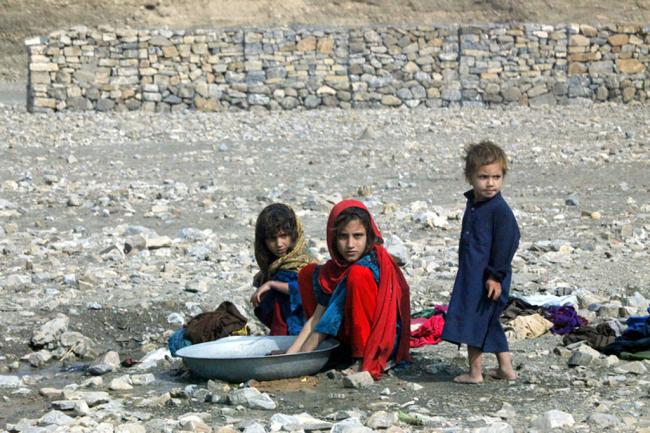
Diarrhoea-related diseases claim lives of 26 children each day in Afghanistan – UNICEF
New York, Nov 3(Just Earth News): Although the number of children under five years dying from diarrhoea each year in Afghanistan has dropped below 10,000 for the first time, the disease still claims the lives of 9,500 children, or 26 each day, the United Nations Children’s Fund (UNICEF) said on Thursday.
“Deaths from diarrhoea are particularly tragic because in most cases, they can be easily avoided,” said Adele Khodr, UNICEF Afghanistan Representative. “Using a toilet and washing your hands is literally a matter of life or death.”
Diarrhoea-related deaths account for around 12 per cent of the 80,000 deaths of children under the age of five that occur annually in Afghanistan.
The risks associated with diarrhoeal infections are exacerbated in the country, where some 1.2 million children are already malnourished and 41 per cent of children are stunted. Poor sanitation and hygiene compound malnutrition, leaving children more susceptible to infections that cause diarrhoea, which in turn worsens malnutrition.
Providing access to safe water and improved sanitation facilities in villages and towns across the country is critical, said Khodr, adding that community-led efforts to improve hygiene practices are the simple and most effective way to save lives.
While insecurity continues to affect humanitarian access to parts of the country and slows development, there is still progress. The district of Nili, in Daykundi province, central Afghanistan, was declared as the country’s first ‘open defecation free district’ at a ceremony on 1 November.
Towns and villages across Nili took on the community-led approach in which families identify areas around their homes that are used as toilets. Through a combination of shock, shame, pride and disgust, families without a toilet decide to build their latrine.
Community-wide commitment and some peer pressure does the rest and typically after three to six months an entire community has given up defecating in the open, contributing to a healthier environment for everyone.
In 2017, UNICEF in Afghanistan has already supported more than 500 Afghan communities to be declared and certified as open-defecation-free.
Photo UNAMA/Sayed Muhammad Shah (file)
Source: www.justearthnews.com
Support Our Journalism
We cannot do without you.. your contribution supports unbiased journalism
IBNS is not driven by any ism- not wokeism, not racism, not skewed secularism, not hyper right-wing or left liberal ideals, nor by any hardline religious beliefs or hyper nationalism. We want to serve you good old objective news, as they are. We do not judge or preach. We let people decide for themselves. We only try to present factual and well-sourced news.
Support objective journalism for a small contribution.


