


Child marriage numbers drop, but still ‘a long way to go’ to end practice – UNICEF
New York, Mar 7 (JEN): Although the prevalence of child marriage is decreasing worldwide, action will need to be stepped up to achieve the global target of ending the practice by 2030, the United Nations Children’s Fund (UNICEF) said on Tuesday.
Progress over the last decade meant 25 million child marriages were prevented, the agency reported.
Overall, the proportion of women who became brides before age 18 decreased by 15 per cent during this period: from one in four to approximately one in five.
“When a girl is forced to marry as a child, she faces immediate and lifelong consequences. Her odds of finishing school decrease while her odds of being abused by her husband and suffering complications during pregnancy increase. There are also huge societal consequences, and higher risk of intergenerational cycles of poverty,” said Anju Malhotra, UNICEF’s Principal Gender Advisor.
“Given the life-altering impact child marriage has on a young girl’s life, any reduction is welcome news, but we’ve got a long way to go.”
Worldwide, some 650 million women alive today were married when they were just girls.
UNICEF reported that the largest decline in child marriage in the last 10 years occurred in South Asia.
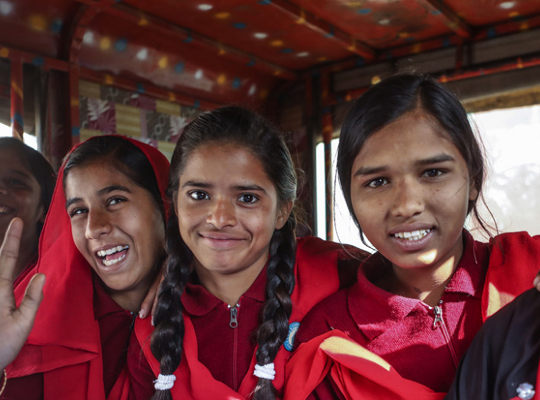
Rates there dropped by roughly a third: from nearly 50 per cent to 30 per cent, largely due to progress in India.
“Increasing rates of girls’ education, proactive government investments in adolescent girls, and strong public messaging around the illegality of child marriage and the harm it causes are among the reasons for the shift,” according to a UNICEF press release.
Despite this progress, the UN agency estimates 12 million girls are married off each year.
Eliminating child marriage and other practices harmful to women and girls are among the targets under the Sustainable Development Goals (SDGs).
The 17 SDGs focus on people, the planet and prosperity, and have a deadline of 2030.
However, UNICEF said “progress must be significantly accelerated” if the child marriage target is to be achieved by this date, warning that an additional 150 million girls could become brides during this time.
Progress particularly needs to be scaled up in sub-Saharan Africa where the “global burden” of child marriage is now shifting, the UN agency added.
The region accounted for close to one in three of the world’s most recently married child brides, compared to one in five a decade ago.
For Malhotra, the UNICEF gender advisor, every child marriage prevented gives another girl the chance to fulfill her potential.
“But given the world has pledged to end child marriage by 2030, we’re going to have to collectively redouble efforts to prevent millions of girls from having their childhoods stolen through this devastating practice,” she said.
UNICEF/Vishwanathan
Support Our Journalism
We cannot do without you.. your contribution supports unbiased journalism
IBNS is not driven by any ism- not wokeism, not racism, not skewed secularism, not hyper right-wing or left liberal ideals, nor by any hardline religious beliefs or hyper nationalism. We want to serve you good old objective news, as they are. We do not judge or preach. We let people decide for themselves. We only try to present factual and well-sourced news.
Support objective journalism for a small contribution.


