October 24, 2026 10:56 pm (IST)

Follow us:


Cambodia: UN agenda seeks asylum reform, freedom of expression
New York, May 3 (IBNS): Amidst reports that Cambodia has agreed in principle to house asylum seekers that had tried to enter Australia, a United Nations senior human rights official wrapping up her visit to the country on Friday urged its Government to respect its international commitments.
After five days in Cambodia, Deputy High Commissioner for Human Rights Flavia Pansieri confirmed to journalists in Phnom Penh that the issue of the transfer or resettlement of refugees, asylum seekers or migrants, was one of the topics she had discussed with Hor Nam Hong, the Deputy Prime Minister and Minister for Foreign Affairs.
“Any person being transferred to Cambodia, regardless of their legal status, is entitled to protection from refoulement,” she reiterated, stating that she did not know enough about the Government plan to comment on its specifics.
She highlighted that Cambodia is a party to the 1951 Refugee Convention, and in accepting asylum seekers or refugees for resettlement, will need to comply with its obligations towards this group of people.
Based on discussions with Government officials and representatives of civil society during her first official visit to Cambodia, Pansieri said that in 2014, “there has been a deterioration in the extent to which freedom of expression and assembly in Cambodia are guaranteed and enjoyed”.
She raised concern about the ongoing ban on demonstrations in Phnom Penh, in force since 4 January, “I urge the Government to take the necessary measures to remove this ban without further delay and to ensure that all citizens are able to exercise their rights to freedom of expression and peaceful assembly.”
Three laws on the judiciary which are to be adopted “soon” in Cambodia should be subject to broad based consultations.
While important “to promote and protect the independence of the judiciary and improve the administration of justice” in the country, the laws should be discussed by all concerned stakeholders “and brought into force only when they are in conformity with international standards”.
Among other issues raised, Pansieri noted that the prisons she has visited “now have better access to water, sanitation and ventilation”. She also commended the progress made by the General Department of Prisons in professionalising prison staff.
Challenges in implementing prison reform policy remain, she added, with jails understaffed and very seriously overcrowded, with the national occupancy rate over 170 per cent. In addition, she called for independent monitoring of torture and ill-treatment of prisoners, and the establishment of an independent National Prevention Mechanism (NPM).
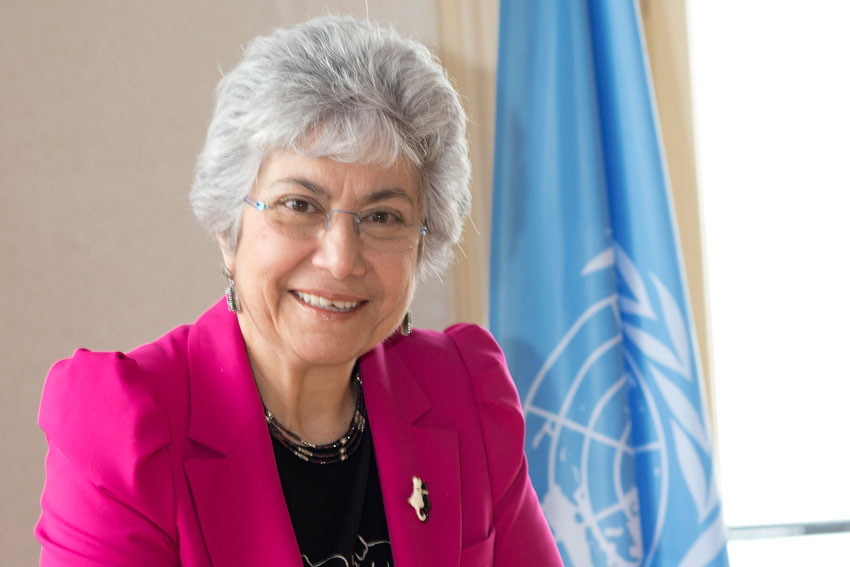
(Flavia Pansieri, United Nations Deputy High Commissioner for Human Rights. Photo: OHCHR)
Support Our Journalism
We cannot do without you.. your contribution supports unbiased journalism
IBNS is not driven by any ism- not wokeism, not racism, not skewed secularism, not hyper right-wing or left liberal ideals, nor by any hardline religious beliefs or hyper nationalism. We want to serve you good old objective news, as they are. We do not judge or preach. We let people decide for themselves. We only try to present factual and well-sourced news.
Support objective journalism for a small contribution.



Latest Headlines
‘Impossible without my intervention’: Melania Trump announces Russia-Ukraine ceasefire in Oleshky
Sat, Oct 24 2026
Meghan Markle ‘deeply distressed’ over child sexual abuse image claims against her father
Sat, Oct 24 2026
Deadly mid-air collision: Four pilots killed as two military aircraft crash in Philippines
Sat, Oct 24 2026
Eiffel Tower women staff row: BAPS monk blames ‘miscommunication’, denies delegation's role
Fri, Oct 23 2026
Dammam airport attack: Indian killed, two compatriots injured as Saudi Arabia faces fresh strikes
Thu, Oct 22 2026
‘Among others’: Macron takes swipe at Trump over France unrest, calls foreign leaders’ remarks ‘stupid’
Thu, Oct 22 2026
Australian MP Helen Haines has both legs amputated after car attack described as political violence
Wed, Oct 21 2026