


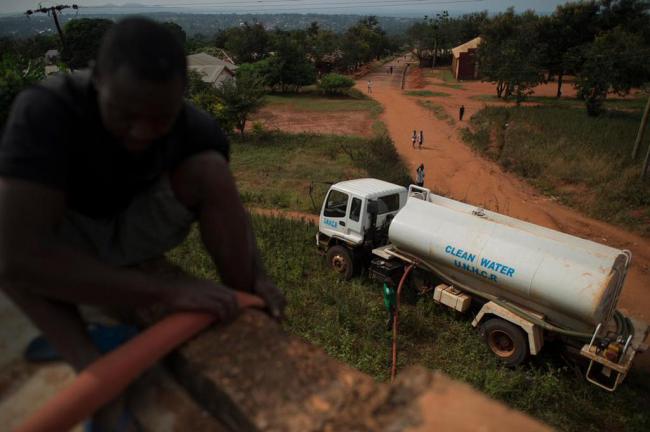
Burundi: UN appeals for wider cholera relief efforts
In a statement released earlier on Friday, the UN spokesperson's office said Ban applauded the dialogue participants – which includes representatives of civil society, political parties, religious organizations of the African Union, the East African Community, the Common Market for Eastern and Southern Africa and the International Conference on the Great Lakes Region – for “the progress achieved so far in the discussions, especially on measures to reduce tensions and create propitious conditions for free, fair, inclusive and peaceful elections.”
The Secretary-General did, however, express concern about the ongoing humanitarian crisis involving the 200,000 Burundian refugees who have fled to neighbouring countries due to political turmoil and violence and who now appear to be caught in an emerging cholera outbreak.
In fact the head of the UN refugee agency (UNHCR), UN High Commissioner for Refugees, Antonio Guterres, today warned that after the 12 year civil war that lasted from 1993-2005 and created hundreds of thousands of refugees, Burundi “does not need another crisis.”
“After the progress that had been made under the Arusha peace accords,” he said, “it is heart-breaking that people have to flee their country again.”
Since early April, nearly 100,000 Burundians have fled across the borders, seeking safety in neighbouring Rwanda, Tanzania and the Democratic Republic of the Congo, and the Office of the United Nations High Commissioner for Refugees (UNHCR) has joined with 17 partners to launch the Regional Refugee Response Plan.
With the situation in Burundi remaining tense and with continued violence reported, aid agencies fear that the number of refugees may double over the next six months.
And with the Tanzanian Government this week declaring a cholera epidemic in the Kigoma area of Lake Tanganyika where many of the refugees are, the situation has grown increasingly complicated and the urgency of implementing the response plan has increased.
Some 31 people have died from the disease so far, including 2 locals and 29 refugees. The deaths have been in the port town of Kigoma on Lake Tanganyika, in the nearby villages of Kagunga and Nyarugusu, and among people being transported by ferry from Kagunga to Kigoma.
Guterres praised the neighbouring countries for keeping their borders open and called on the international donor community to support the Regional Refugee Response Plan.
“The authorities and host communities have been very generous in welcoming the refugees and allowing them to share local resources,” he said. “I hope that the international community will match this generosity.”
Under the plan, participating agencies appeal for $207 million for basic protection and assistance activities until September 2015, when the plan will be reviewed. Providing clean water, sanitation and health services as well as shelter are the main priorities of the Regional Refugee Response Plan.
Photo: UNHCR/B. Loyseau
Support Our Journalism
We cannot do without you.. your contribution supports unbiased journalism
IBNS is not driven by any ism- not wokeism, not racism, not skewed secularism, not hyper right-wing or left liberal ideals, nor by any hardline religious beliefs or hyper nationalism. We want to serve you good old objective news, as they are. We do not judge or preach. We let people decide for themselves. We only try to present factual and well-sourced news.
Support objective journalism for a small contribution.


