


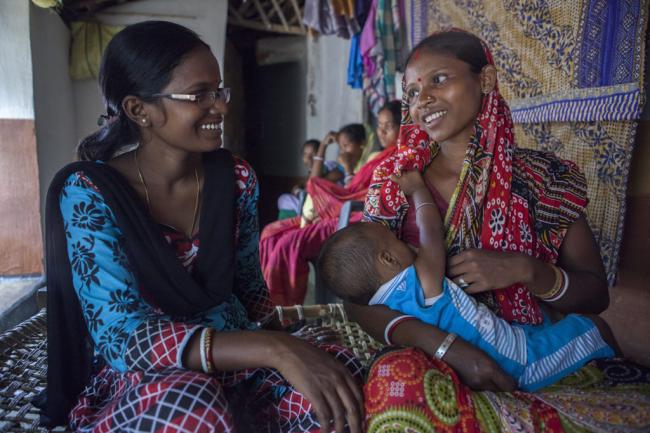
Breastfeeding is 'smartest investment' families, communities and countries can make – UN
“Breastfeeding gives babies the best possible start in life,” said Tedros Adhanom Ghebreyesus, Director-General of the World Health Organization (WHO).
He added that breastmilk works like a baby's first vaccine, protecting infants from potentially deadly diseases and giving them all the nourishment they need to survive and thrive.
The Global Breastfeeding Scorecard, a new report by the UN Children's Fund (UNICEF) and WHO in collaboration with the Global Breastfeeding Collective – an initiative launched on Tuesday that aims to increase global breastfeeding rates – points out that breastfeeding not only helps prevent diarrhoea and pneumonia, two major causes of death in infants, it also helps reduce mothers' risk of ovarian and breast cancer, two leading causes of death among women.
Yet, the scorecard, which evaluated 194 nations, reveals that no country in the world fully meets recommended breastfeeding standards.
It found that only 40 per cent of children younger than six months are given nothing but breastmilk and only 23 countries have exclusive breastfeeding rates above 60 per cent.
Global investment in breastfeeding 'far too low,' says UN
The scorecard was released at the start of World Breastfeeding Week alongside a new analysis, Nurturing the Health and Wealth of Nations: The Investment Case for Breastfeeding, demonstrating that an annual investment of only $4.70 per newborn is required to increase the global rate of exclusive breastfeeding among children under six months to 50 per cent by 2025.
The analysis suggests that meeting this target could save the lives of 520,000 children under the age of five and potentially generate $300 billion in economic gains over 10 years, as a result of reduced illness and health care costs and increased productivity.
“Breastfeeding is one of the most effective – and cost effective – investments nations can make in the health of their youngest members and the future health of their economies and societies,” said UNICEF Executive Director Anthony Lake. “By failing to invest in breastfeeding, we are failing mothers and their babies – and paying a double price: in lost lives and in lost opportunity.”
The investment case shows that in five of the world's largest emerging economies, namely China, India, Indonesia, Mexico and Nigeria, the lack of investment in breastfeeding has resulted in an estimated 236,000 child deaths per year and $119 billion in economic losses.
Globally, investment in breastfeeding is far too low. Each year, governments in lower- and middle-income countries spend approximately $250 million on breastfeeding promotion – donors provide only an additional $85 million.
Co-led by UNICEF and WHO, the Global Breastfeeding Collective is calling on countries to increase funding to raise breastfeeding rates from birth through two years of age; enact paid family leave and workplace breastfeeding policies, building on the UN International Labour Organization's maternity protection guidelines as a minimum requirement; improve access to skilled breastfeeding counselling as part of comprehensive breastfeeding policies and programmes in health facilities; and strengthen links between health facilities and communities, and encourage community networks that protect, promote, and support breastfeeding.
Both UN agencies emphasize that breastfeeding is critical to achieve many of the Sustainable Development Goals (SDGs), asserting that it improves nutrition, SDG 2; prevents child mortality and decreases the risk of non-communicable diseases, SDG 3; and supports cognitive development and education, SDG 4. Breastfeeding is also an enabler to ending poverty, promoting economic growth and reducing inequalities.
Photo: UNICEF/Vishwanathan
Source: www.justearthnews.com
Support Our Journalism
We cannot do without you.. your contribution supports unbiased journalism
IBNS is not driven by any ism- not wokeism, not racism, not skewed secularism, not hyper right-wing or left liberal ideals, nor by any hardline religious beliefs or hyper nationalism. We want to serve you good old objective news, as they are. We do not judge or preach. We let people decide for themselves. We only try to present factual and well-sourced news.
Support objective journalism for a small contribution.


