


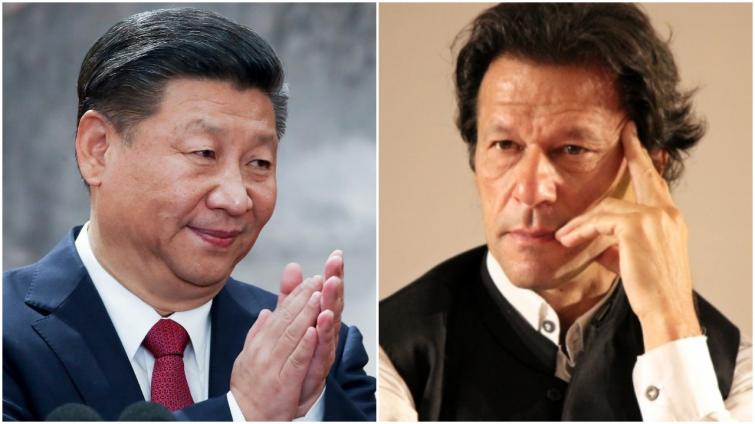
 Chinese Debt Trap
Beijing's power loans triggering a debt trap for Islamabad
Islamabad: Pakistan is emerging as the new nation which is struggling to repay Chinese loans extended under the Belt and Road Initiative, media reports said.
There are reportedly indications that Pakistan might soon seek to reschedule as much as $22 billion in outstanding power sector credits.
In recent years Chinese loans have fueled a massive buildout of Pakistan’s power generation, financing that has turned a perennial electricity shortfall into a massive capacity surplus that the highly indebted nation can increasingly ill-afford, reports Asia Times.
The wind, coal, solar and thermal power plant loans have consumed almost half of the outlays of the Beijing-backed US$60 billion China-Pakistan Economic Corridor (CPEC) scheme, which seeks to improve the latter’s infrastructure and facilitate more bilateral trade, among other geostrategic objectives, the nesw portal reported.
The two sides are now engaged in top-level talks on power-sector debt payment rescheduling, according to a well-placed source familiar with the situation who spoke with Asia Times.
“Yes, we have accelerated efforts to get some sort of relaxation from Beijing either in the power purchase mechanism or on the mode of payment of capacity cost,” a high-level government source involved in CPEC policy-making told Asia Times, requesting anonymity.
The source told Asia Times that a high-level delegation led by Pakistani President Arif Alvi visited Beijing last March to discuss the possibility of a 2.5% cut in the present interest rate on power sector-related loans at Libor plus 4.5%.
“[Alvi] also discussed with his Chinese counterpart a 10-year extension in the debt repayment period. These two rebates, if approved, would save [Pakistan] about $600 million annually,” the same CPEC policymaking source said.
The source told the news portal that Chinese state-owned banks and other financial institutions were presently evaluating Islamabad's debt reduction proposals and that a response was anticipated before the end of March.
Dr Farrukh Saleem, an Islamabad-based political economist, analyst and columnist, told Asia Times that the Chinese do not discuss such issues in the public domain and prefer to decide such sensitive matters behind the scenes.
“This may be a reason why they swept Islamabad’s proposal under the carpet,” Saleem opined.
Support Our Journalism
We cannot do without you.. your contribution supports unbiased journalism
IBNS is not driven by any ism- not wokeism, not racism, not skewed secularism, not hyper right-wing or left liberal ideals, nor by any hardline religious beliefs or hyper nationalism. We want to serve you good old objective news, as they are. We do not judge or preach. We let people decide for themselves. We only try to present factual and well-sourced news.
Support objective journalism for a small contribution.


