


Ban urges ridding the world of chemical weapons ‘once and for all’
Confirmation of the use of chemical weapons in Syria two years ago served as “a shocking reminder” that their use has not yet been consigned to history said the Secretary-General in a message delivered on his behalf by Virginia Gamba, Deputy to the UN High Representative for Disarmament Affairs, at a ceremony in Ypres, Belgium, where the first chemical attack was recorded 100 years ago today.
“The only fitting tribute to the memory of those who died at Ypres, and to all victims of chemical warfare, is to rid the world of chemical weapons once and for all,” Ban said in a message delivered by Virginia Gamba, Deputy to the High Representative for Disarmament Affairs, at an event held at the site of the Second Battle of Ypres.
“The horrors of the First World War must be recalled as we grapple with today’s security challenges,” he said.
He added, “On this solemn anniversary, we remember the atrocities with the resolve to make sure that unlike that gas, the threats do not linger.”
The UN chief recalled that the first time that chemical weapons had been deployed on a large scale in battle helped prompt the 1925 Geneva Protocol, which banned the use of chemical weapons outright.
And some 70 years later, the Chemical Weapons Convention prohibited the development, production, acquisition, stockpiling, retention, transfer and use of chemical weapons, and it also required States Parties to destroy any chemical weapons they owned or possessed.
“The Geneva Protocol and the Chemical Weapons Convention are accepted as an indispensable part of the international norm against chemical weapons,” Ban said.
He also praised the multinational effort to eliminate the chemical weapons programme of Syria “as a momentous undertaking and an important achievement” that “reaffirmed international resolve against chemical weapons, and it illustrated the power of collective action in the service of a common goal.”
But at the same time, he said: “We owe it to the victims of chemical weapons over the past 100 years – and future generations at risk of attacks – to remember that the world is not free from this threat.”
Noting that “allegations of the use of chemical weapons continue,” Ban said that “some of these allegations surround the use of chlorine gas is a bitter irony and a reminder that the international community cannot be complacent about its achievements, nor can it allow the taboo that surrounds such weapons to fade.”
Chlorine gas was used at Ypres on April 21, 1915, and is reportedly the same type of gas used in Syria.
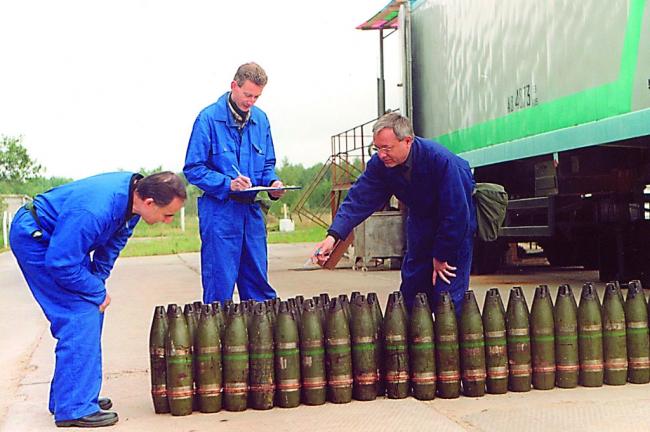
The Organization for the Prohibition of Chemical Weapon (OPCW) marked the Centennial Commemoration of the first large-scale use of chemical weapons at Ypres and honoured the memory of and paid tribute to all victims of chemical weapons.
According to OPCW, chemical weapons resulted in more than one million casualties, and nearly 100,000 deaths during the First World War.
Credit: OPCW
Support Our Journalism
We cannot do without you.. your contribution supports unbiased journalism
IBNS is not driven by any ism- not wokeism, not racism, not skewed secularism, not hyper right-wing or left liberal ideals, nor by any hardline religious beliefs or hyper nationalism. We want to serve you good old objective news, as they are. We do not judge or preach. We let people decide for themselves. We only try to present factual and well-sourced news.
Support objective journalism for a small contribution.


