


 Austria
Austria bans headscarves in schools for girls under 14, faces strong criticism
Vienna/IBNS: Austria has approved a controversial new law banning girls under the age of 14 from wearing headscarves in both public and private schools.
The measure, backed by the conservative-led coalition of the ÖVP, SPÖ and NEOS, is being described by the government as a step toward strengthening gender equality and protecting young girls from “oppression.”
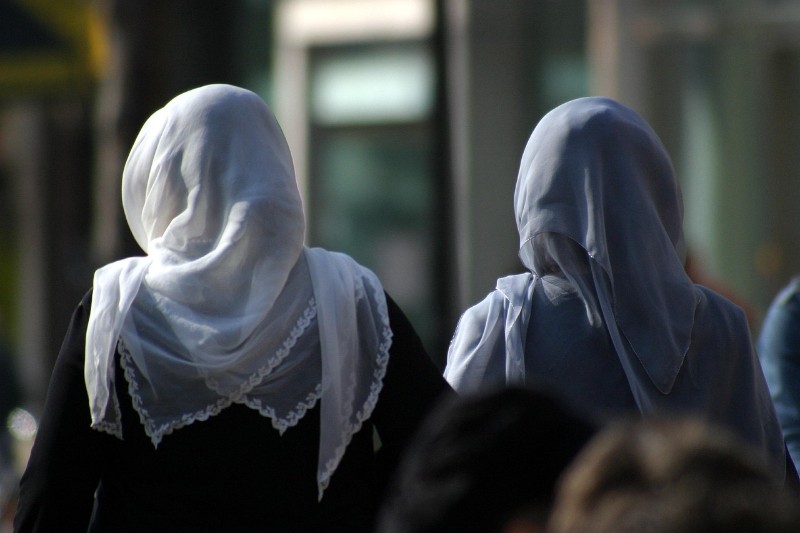
The legislation explicitly prohibits “traditional Muslim” head coverings such as the hijab and burka for minors below 14.
It comes six years after a similar ban for girls under 10 was overturned by Austria’s Constitutional Court for unfairly targeting the Muslim community.
Penalties and procedures for violations
Students who violate the new ban will be required to undergo discussions with school authorities along with their legal guardians.
Repeated violations will trigger a notification to the child and youth welfare agency.
In extreme cases, families may face fines of up to €800.
Parliamentarians supporting the law argue that it is meant to empower students. NEOS parliamentary leader Yannick Shetty insisted the measure is not anti-religion but is intended to safeguard the freedom of girls.
He estimated the law could impact roughly 12,000 students across Austria.
Opposition parties divided on the ban
The far-right Freedom Party (FPÖ), despite backing the ban, criticised it for not going far enough.
The party called it merely “a first step,” demanding that the restriction be expanded to all pupils and school staff.
FPÖ leaders have claimed that “political Islam has no place” in Austrian schools.
In contrast, the Greens condemned the legislation as unconstitutional.
Green MP Sigrid Maurer argued that the law directly discriminates against Muslims and violates equality principles.
Muslim community denounces the measure
Austria’s official Islamic Community (IGGÖ) sharply opposed the ruling, warning that it infringes on fundamental rights and risks stigmatising young Muslim girls.
In a statement, IGGÖ said the ban would marginalise rather than empower children and confirmed plans to challenge the law’s constitutionality.
The IGGÖ referenced the 2020 Constitutional Court ruling, which struck down an earlier version of the ban, arguing that the new legislation raises the same legal concerns.
Govt uncertain over constitutional validity
The coalition government in Austria maintains that it has attempted to design the law to withstand judicial scrutiny, though officials admit uncertainty about how Austria’s highest court will rule.
“Will it pass muster? I don’t know. We have done our best,” NEOS leader Shetty said.
Implementation timeline
Austria will begin an awareness and preparatory phase in February 2026.
The full ban will take effect in September 2026, coinciding with the start of the next academic year.
Support Our Journalism
We cannot do without you.. your contribution supports unbiased journalism
IBNS is not driven by any ism- not wokeism, not racism, not skewed secularism, not hyper right-wing or left liberal ideals, nor by any hardline religious beliefs or hyper nationalism. We want to serve you good old objective news, as they are. We do not judge or preach. We let people decide for themselves. We only try to present factual and well-sourced news.
Support objective journalism for a small contribution.


