


Asia-Pacific moving in ‘wrong direction’ on some development targets, notes UN regional report
“The region is making progress towards achieving the Goals on poverty, education, economic growth, industry and infrastructure, and life below water,” Shamshad Akhtar, the Executive Secretary of the UN Economic and Social Commission for Asia and the Pacific (ESCAP), launching a report assessing regional development since 2000.
“[But] progress [has been slow] towards achieving food security, agricultural sustainability, good health and well-being for all, and gender equality,” she added.
The Asia-Pacific SDGs Baseline report, the first regional measurement methodology of its kind, was launched at the side lines of the ongoing 2017 session of the High-level Political Forum on Sustainable Development, at the UN Headquarters, in New York.
The report has established a “baseline” for the SDGs through the assessment of regional progress since the turn of the millennium and has identified development gaps still need to be addressed to achieve the 2030 Agenda for Sustainable Development.
One of the key aspects highlighted by the report is that the region is moving in the “wrong direction” in terms of the targets related to on reducing inequalities, sustainable cities and communities, and ensuring responsible consumption and production.
“[This] trend must be reversed to achieve the Goals by 2030,” underscored ESCAP.
Furthermore, the report also noted the areas where data is insufficient or not available to accurately measure progress, such as in areas such as those to analyze the level of inequality.
“Data scarcity is a major challenge,” noted Akhtar in her foreword to the report, highlighting the need for a more integrated and inclusive approach for generating statistics.
“Addressing systemic data and statistics gaps for monitoring the SDGs will only be possible if resources are mobilized in a targeted and sustainable way to support the implementation of national strategies for statistical development,” she added.
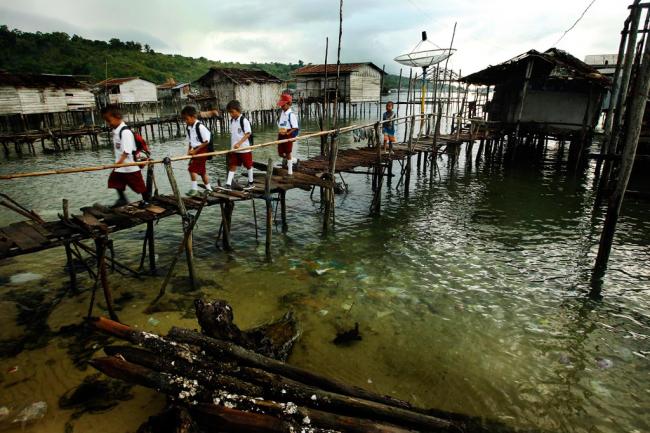
Photo: ESCAP/Yusuf Ahmad
Source: www.justearthnews.com
Support Our Journalism
We cannot do without you.. your contribution supports unbiased journalism
IBNS is not driven by any ism- not wokeism, not racism, not skewed secularism, not hyper right-wing or left liberal ideals, nor by any hardline religious beliefs or hyper nationalism. We want to serve you good old objective news, as they are. We do not judge or preach. We let people decide for themselves. We only try to present factual and well-sourced news.
Support objective journalism for a small contribution.


