


Amid ‘dramatic’ climate changes, UN launches plan to step-up polar weather and sea-ice monitoring
Polar conditions are changing dramatically, impacting weather across the globe, the World Meteorological Organization (WMO) said, launching the Year of Polar Prediction, which will aim to improve predictions of weather, climate and ice conditions in the Arctic and Antarctic.
“Because of teleconnections, the poles influence weather and climate conditions in lower latitudes where hundreds of millions of people live,” warned WMO Secretary-General Petteri Taalas.
“Warming Arctic air masses and declining sea ice are believed to affect ocean circulation and the jet stream, and are potentially linked to extreme phenomena such as cold spell, heat waves and droughts in the northern hemisphere,” he added.
Scientists, with the help of data from operational forecasting centres, will observe, model, and improve forecasts of weather and climate systems to learn more about and improve the understanding of the weather changes at the poles.
In light of The Year of Polar Prediction, special observing periods will be added to improve the number of routine observations, for example by weather balloon launches, and buoy deployments from research vessels to measure atmospheric and oceanographic conditions.
Climate change at the Poles
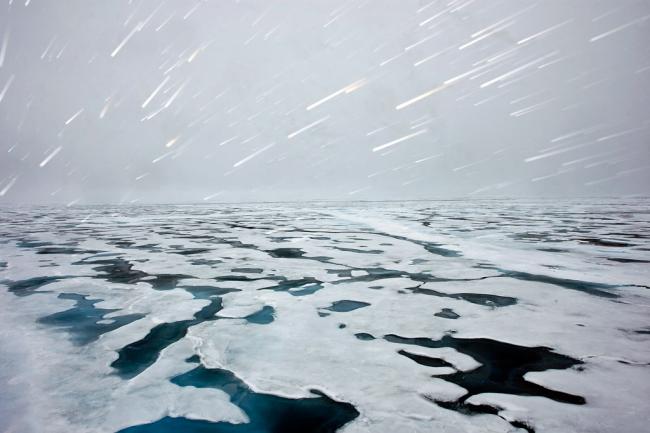
The effects of worldwide greenhouse gas emissions, one of the leading causes of global warming, are felt more intensely in the Polar Region as than anywhere else. According to WMO, both the Artic and Antarctica are warming twice as fast as the rest of the world causing melting of glaciers and ice shelves, shrinking sear ice and snow cover. Polar wildlife ecosystems and indigenous population are already feeling the impact of climate change.
“Arctic sea-ice maximum extent after the winter re-freezing period in March was the lowest on record because of a series of ‘heat-waves.’ Antarctic sea ice minimum extent after the most recent Southern Hemisphere summer melt was also the lowest on record,” explained Thomas Jung of the Alfred Wegener Institute Helmholtz Centre for Polar and Marine Research, and chair of the Polar Prediction Project steering committee.
“The rate and implications of polar environmental change is pushing our scientific knowledge to the limits,” he warned.
WMO further predicts that the noticeable changes in weather, climate and ice conditions at the poles are leading to increased human activities such as transportation, tourism, fisheries are and natural resource exploitation and extraction.
“The expected increase in activity comes with its own share of risks to both the environment and society, including traditional indigenous livelihoods”, said Taalas. “Ice-laden polar seas are a challenge to navigate, whilst any oil spills could be catastrophic.”
“Accurate weather and sea-ice information will thus become increasingly vital in order to improve safety management in Polar Regions and beyond,” the WMO chief concluded.
Improving Artic forecasts
Polar and high mountain activities are among WMO’s top strategic priorities because of the growing impact of climate change from greenhouse gas emissions.
The Arctic and Antarctic are currently among the world’s most poorly observed regions. Lack of data along with limitations of models, impact the quality of forecasts while insufficient information about polar weather will also the affect quality of weather forecasts in other parts of the world.
WMO therefore expects that advances in Polar prediction will lead to improved weather forecasts and climate predictions both for Polar Regions as well as densely populated countries in other parts of the world.
UN Photo/Mark Garten (file)
Source: www.justearthnews.com
Support Our Journalism
We cannot do without you.. your contribution supports unbiased journalism
IBNS is not driven by any ism- not wokeism, not racism, not skewed secularism, not hyper right-wing or left liberal ideals, nor by any hardline religious beliefs or hyper nationalism. We want to serve you good old objective news, as they are. We do not judge or preach. We let people decide for themselves. We only try to present factual and well-sourced news.
Support objective journalism for a small contribution.


