


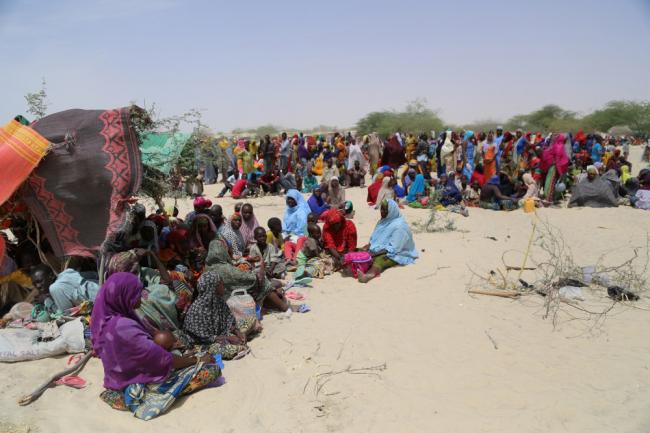
Alarming levels of insecurity in Nigeria driving civilian displacement: UN agency
“Nearly half a million people – refugees, returnees, internally displaced persons and local communities – face an acute food security and livelihood crisis,” added WFP spokesperson Elisabeth Byrs during a press conference in Geneva.
Civilians in the northeast Nigeria are fleeing attacks perpetrated by the armed insurgent group Boko Haram.
Emphasizing the plight of newly arriving refugee children in Niger and Cameroon, Byrs said malnutrition rates have surpassed emergency thresholds.
“In some violence-affected areas near the Cameroon-Nigeria border, acute malnutrition rates among children under five years of age could be as high as 36 per cent,” she warned.
With the arrival of the rainy season, already stretched health centres would struggle to cope, she continued. As food became scarce, some 4,000 refugees have moved to the Minawao refugee camp since the end of April.
“Displaced people said they could not rely for help on host communities which are already struggling to access food”, she added.
Making up 75 per cent of Nigerian refugees in Cameroon, 84 per cent of internally displaced persons in Cameroon, and more than 80 per cent of the Nigerian refugees in Niger, women and children are the most exposed.
WFP aims to provide food to nearly 400,000 people each month but it is impossible without urgent funding, stressed the spokesperson. The Programme is less than 50 per cent funded – with $41.6 million needed until the end of the year.
“In April-May, WFP provided food to about half of the people it was planning to assist and, in some instances, the ration size was reduced”, concluded Byrs.
Photo: WFP Niger/Vigno Hounkanli
Support Our Journalism
We cannot do without you.. your contribution supports unbiased journalism
IBNS is not driven by any ism- not wokeism, not racism, not skewed secularism, not hyper right-wing or left liberal ideals, nor by any hardline religious beliefs or hyper nationalism. We want to serve you good old objective news, as they are. We do not judge or preach. We let people decide for themselves. We only try to present factual and well-sourced news.
Support objective journalism for a small contribution.


