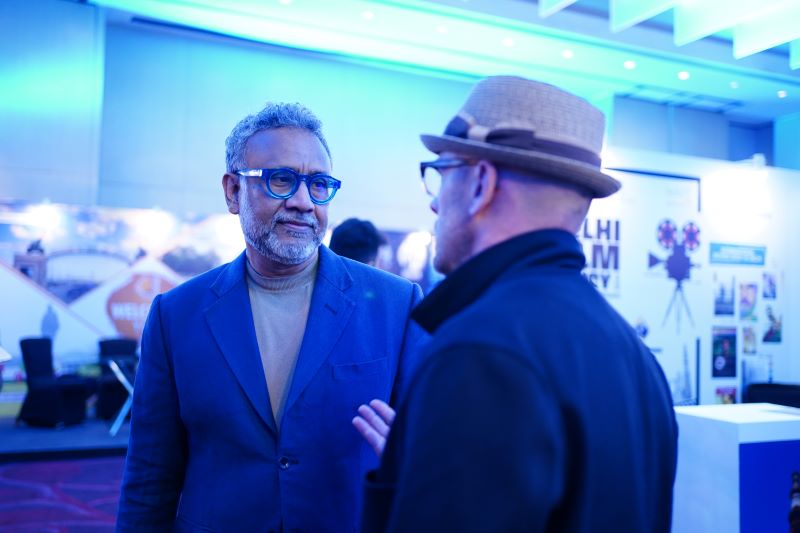
 Anubhav Sinha
Convenience should be top priority, not subsidies: Anubhav Sinha to Film Commissions
The 11th India International Film Tourism Conclave (IIFTC) event had a panel discussion focused on enhancing the relationship between India's film industry and state film commissions.
Renowned filmmaker Anubhav Sinha shared compelling insights on the expectations and challenges that filmmakers face when engaging with film commissions across various states.
The panel included esteemed representatives from the Film Cells of Gujarat, Maharashtra, New Delhi and Bihar.
The conversation centred on addressing the complexities of film permissions, production logistics, and state incentives.
In his role as moderator, Sinha opened the discussion with a touch of humour, admitting he had “never moderated anything before.”
He noted that he was honoured to share the stage with panellists who actively work to support the film business.
Reflecting on his early experiences filming outside India, he recalled his first encounter with a film commission while working on Tum Bin in Canada in 2000.
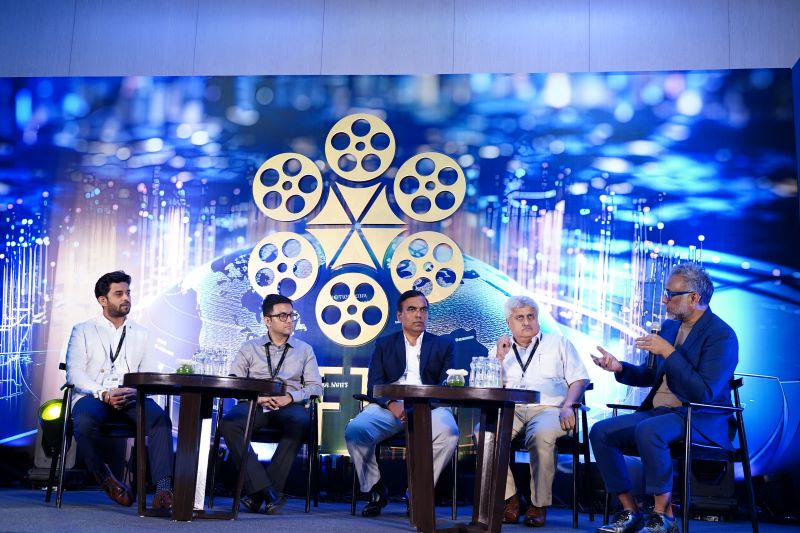 Anubhav Sinha at the 11th India International Film Tourism Conclave | Photo courtesy: PR Team
“It was a fantastic experience,” Sinha remarked, pointing out that, at the time, Indian filmmakers had limited knowledge of film commissions and the regulations governing various locations.
He praised the growth of film commissions across Indian states but expressed a wish for a stronger emphasis on convenience over financial incentives.
Shifting Focus from Subsidies to Convenience
Sinha addressed a critical gap in the industry’s relationship with film commissions.
He observed that in most states, subsidies often become the focal point of these commissions, turning them into “accounting and audit offices” where filmmakers apply for grants after meeting specific spending thresholds. “Convenience should be the top priority,” Sinha argued, “not subsidies.”
He suggested that commissions work towards making the production process smoother and more efficient, providing benefits like exclusive access to affordable hotel rates, expedited location permissions, and improved support from local agencies, such as traffic and police departments.
Sinha’s anecdote about Ramoji Film City in Hyderabad underscored his argument: “Ramoji Rao Film City offers hotels, equipment, and various locations, making it an all-in-one solution that filmmakers gravitate to for convenience alone.” He called on film commissions to develop similarly compelling offerings, ensuring they become the preferred choice for filmmakers due to seamless access and support rather than just financial incentives.
Looking Forward
As the conversation concluded, Sinha urged film commissions to enhance accessibility and engagement with the industry, creating an infrastructure where convenience speaks louder than subsidies.
For an industry as dynamic as filmmaking, the true measure of support should be reflected in efficient processes and strong relationships.
Through such changes, he believes that India’s states can become more appealing to both domestic and international filmmakers, ultimately benefiting regional economies and the industry at large.
Support Our Journalism
We cannot do without you.. your contribution supports unbiased journalism
IBNS is not driven by any ism- not wokeism, not racism, not skewed secularism, not hyper right-wing or left liberal ideals, nor by any hardline religious beliefs or hyper nationalism. We want to serve you good old objective news, as they are. We do not judge or preach. We let people decide for themselves. We only try to present factual and well-sourced news.
Support objective journalism for a small contribution.