Rare celestial event to take place on June 21
New Delhi/UNI: The first solar eclipse of this year will take place on Sunday, which is occurring during the summer solstice, the longest day of year in the Northern Hemisphere.
While people living along the path of annular eclipse passing through Anupgarh, Suratgarh, Sirsa, Jakhal, Kurukshetra, Yamunanagar, Dehradun, Tapowan and Joshimath will be able to see the annular phase, people in rest of India can witness a partial eclipse.
This rare celestial event occurs when Moon comes between the Sun and Earth, the shadow falls on the surface of the Earth. The Sun is entirely covered by the Moon for a brief period. Those places that are engulfed by the dark, a dense umbral shadow of Moon experiences a total solar eclipse.
"Annular solar eclipse is a particular case of the total solar eclipse. Like the total solar eclipse, the Moon is aligned with the Sun. However, on that day, the apparent size of Moon happens to be a wee smaller than the Sun.
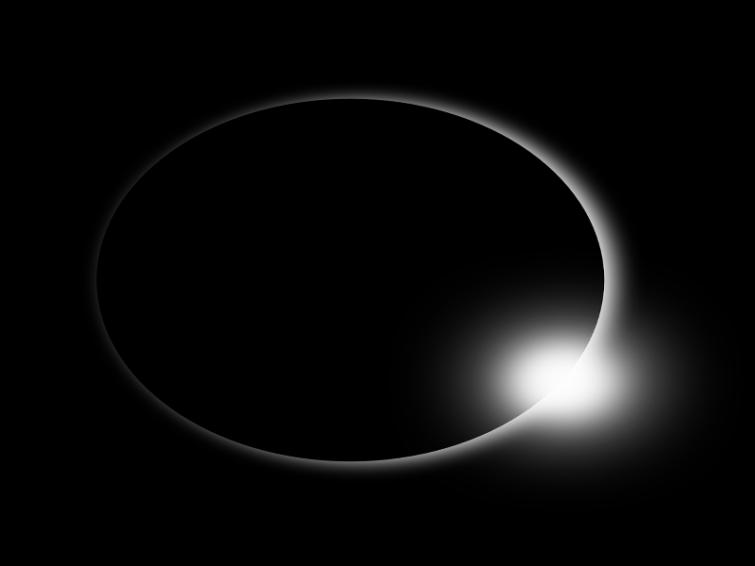
''Hence, the Moon covers the central part of the Sun, and the rim of the Sun appears like a 'ring of fire' in the sky for a very brief moment,'' Samir Dhurde of The Inter-University Centre for Astronomy and Astrophysics at Pune said.
At the onset of the solar eclipse, Sun gives a characteristic appearance of a bitten apple. A small part of the Sun is covered by the disc of the Moon. After that, slowly and steadily the disc of the Moon embraces larger and larger part of the Sun.
On a narrow track that the Moon's shadow traces on Earth during an annular solar eclipse, people can see the Moon traversing on the Sun and covering the central part. As the Moon is not able to block out the entire Sun, a bright ring of sunlight around the Moon will be visible. This is how this type of eclipse earned the nickname the "ring of fire" eclipse.
The next solar eclipse, which will be a partial solar eclipse, visible from India will take place on October 25, 2022. It will be visible in western part of India.
Bhuj city in Gujarat will be the first town in India to see the beginning of the eclipse at 0958 hrs. The eclipse ends four hours later at Dibrugarh in Assam at 1429 hrs.
Ghersana tehsil of Sriganganagar district in Rajasthan, the western boundary of India, will be the first to witness the annular phase of the eclipse at 1150 hrs, which will last for 30 seconds.
Looking directly at the eclipsed Sun can cause severe damage to the eyes and vision. The celestial event should be witnessed only with special goggles made for looking at the Sun. These goggles filter the sunlight for safe viewing.
The experts also suggested not to use sunglasses, goggles, exposed x-ray sheet or lampblack over a glass to watch this eclipse, nor it would be safe to view the Sun's image on the surface of the water.
Support Our Journalism
We cannot do without you.. your contribution supports unbiased journalism
IBNS is not driven by any ism- not wokeism, not racism, not skewed secularism, not hyper right-wing or left liberal ideals, nor by any hardline religious beliefs or hyper nationalism. We want to serve you good old objective news, as they are. We do not judge or preach. We let people decide for themselves. We only try to present factual and well-sourced news.
Support objective journalism for a small contribution.