President of India calls for 'Electoral Reforms'
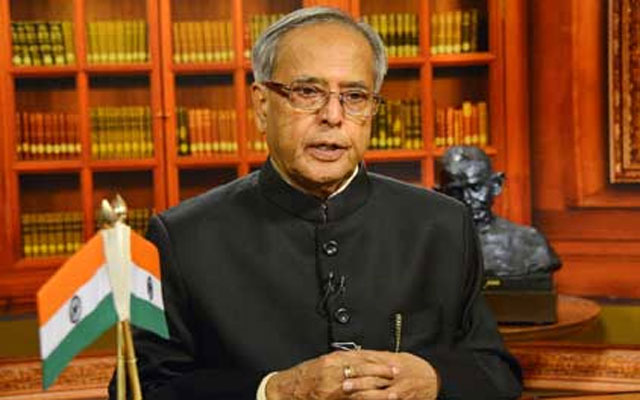
Speaking on the occasion, the President said that India adopted its Constitution in 1950 and the first General Elections were held in 1952.
In the initial years, many doubted that Parliamentary system of democracy in India would be successful.
However, regular elections held successfully have proved the skeptics wrong. Many scholars later commented that we have entered a coalition era and the possibility of forming a single party government in a diverse country like India was unlikely.
However, this view was proved wrong in 1984 as well as in the last General Elections of 2014, when a decisive mandate was given in favour of a single political party.
The President said there are certain areas regarding holding of elections which require attention and there are aberrations which need to be corrected. This has necessitated electoral reforms which should be taken up seriously.
The President emphasized on the need to avoid disruption of Parliamentary proceedings.
He said that while three Ds are essential in a parliamentary system of democracy i.e. Debate, Dissension and Decision the fourth D i.e. Disruption is totally unacceptable.
The Parliament is expected to transact business on important issues such as those related to money and finance.
Whatever be the differences, members have the opportunity to speak their mind and discuss issues freely. Even if a member levels an allegation against someone, no court can prosecute him because he has said so on the floor of the House.
This extent of freedom available to Members of Parliament should not be misused by causing disruptions.
Disruptions amount to gagging the majority as it is only the minority which disrupts and the Chair has no choice but to adjourn the proceedings.
The President said holding of frequent elections is a strain on both administrative and financial resources.
"We are ready to pay this price for democracy, but, it should not be at the cost of development. Administrative and development work is adversely affected during elections since no new development projects can be taken up," Mukherjee said.
During state elections, work related to Government of India in that state should not be affected.
The Election Commission, State and Central Governments and political parties should sit together and discuss this issue.
The President said the Election Commission of India could consider compressing the time frame of announcement, notification and conduct of the elections.
The period of elections tends to get very long as it is spread over phases.
Support Our Journalism
We cannot do without you.. your contribution supports unbiased journalism
IBNS is not driven by any ism- not wokeism, not racism, not skewed secularism, not hyper right-wing or left liberal ideals, nor by any hardline religious beliefs or hyper nationalism. We want to serve you good old objective news, as they are. We do not judge or preach. We let people decide for themselves. We only try to present factual and well-sourced news.
Support objective journalism for a small contribution.