Pakistan plans to challenge India's suspension of Indus Waters Treaty in international court: Report
Islamabad/IBNS: Seeking some legal actions against New Delhi's move to place the Indus Waters Treaty in "abeyance", Pakistan is planning to take India to the international court in a desperate attempt to find some reprieve, media reports said.
The Indian Government last week suspended the decades-old Indus Waters Treaty with Pakistan indefinitely as a part of some strict measures taken against Islamabad over the "cross-border linkages" that emerged during the investigation into the Pahalgam terror attack.
Stung by the move, Pakistan warned that "any attempt to stop or divert the flow of water belonging to Pakistan will be considered as an act of war".
Staring at a water crisis, Pakistan, which is already severely parched, Minister of State for Law and Justice Aqeel Malik told Reuters on Monday that Islamabad is working on plans for at least three different legal options, including raising the issue at the World Bank, the treaty's facilitator.
Islamabad is also approaching the International Court of Justice in Hague, where it could allege that India has violated the 1969 Vienna Convention on the Law of Treaties.
"Legal strategy consultations are almost complete," Malik said, adding the decision on which avenue to pursue would be made "soon".
Malik further stated that a fourth diplomatic option was to raise the issue at the United Nations Security Council. "All the options are on the table and we are pursuing all appropriate and competent forums to approach," he told Reuters.
Blaming India for ending the Indus Waters Treaty unilaterally, he said: "The treaty cannot be ended unilaterally", adding that "there is no such provision within the treaty."
Significance of the Indus Water Treaty
For over six decades, the Indus Waters Treaty (IWT) has been crucial in facilitating peaceful water sharing between India and Pakistan, even during times of heightened political and military tensions.
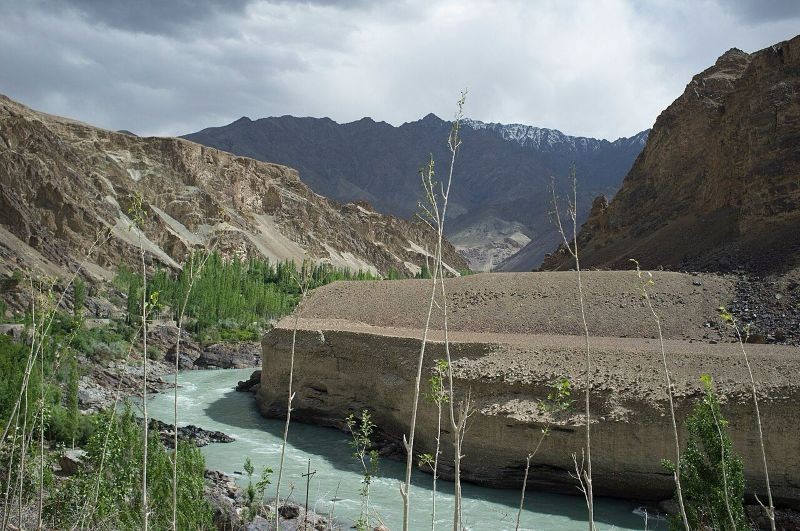
As part of the Indus Water Treaty, which was brokered by the World Bank, India has full right over the three eastern rivers in the Indus system - Ravi, Beas and Sutlej.
Meanwhile, Pakistan gets access to around 135 million acre feet (MAF) of water from the three Western rivers - Indus, Jhelum, and Chenab - all of which flow downstream to the country from India.
The Permanent Indus Commission, the body responsible for resolving disputes, continued its functions even during the wars of 1965 and 1971, demonstrating the resilience of the treaty framework.
Despite facing multiple terror attacks, including the 2001 Indian Parliament attack and the 2019 Pulwama attack, India had not withdrawn from the treaty until the Pahalgam attack.
However, the Pahalgam terror attack prompted the Indian government to take a stern step.
Among the options that are on the table in the short term, the Centre is looking at desilting existing dams on the Indus, Jhelum, and Chenab and increasing reservoir capacity, all of which will reduce the water flowing into Pakistan, said reports.
ICJ cannot arbitrate
The International Court of Justice is based entirely on the consent of States (nations) and not on a universal obligation. States need to declare their acceptance in full or in part of compulsory jurisdiction.
On September 27, 2019, India, which abides by the international rules-based order, has also submitted a declaration recognizing the jurisdiction of the Court as "compulsory". However, in the declaration signed by Dr S Jaishankar, India had listed down 13 exceptions wherein the ICJ will not have jurisdiction over India.
Out of the 13 points, point number two reads, ICJ shall not have jurisdiction for 'disputes with the government of any State which is or has been a Member of the Commonwealth of Nations'.
This means that Pakistan, which is a Commonwealth nation, cannot take India to the ICJ, since its jurisdiction is not valid in the case, thereby making any such attempt by Islamabad null and void.
Pahalgam massacre
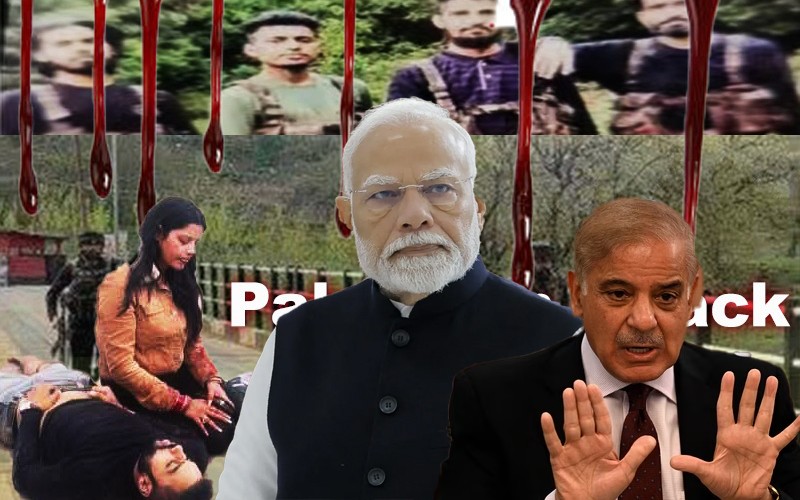
Twenty-six people, including 23 Hindu male tourists, were killed by terrorists in Baisaran meadows, a popular destination in Jammu and Kashmir's Pahalgam, on April 22.
The terrorists- belonging to The Resistance Front (TRF), which is an offshoot of Pakistan-based Lashkar-e-Taiba (LeT)- asked the victims to chant Islamic verses (kalma) and made them pull down their pants to be sure of their their non-Muslim religious identities (read circumcision) before gunning them down before their families, including wives, children and daughters.
The massacre triggered a nationwide outrage and escalated India-Pakistan tensions as New Delhi vowed to avenge the killings.
In an immediate response India suspended the landmark Indus River water-sharing treaty and closed the Attari-Wagah road border which acts a lifeline of Indo-Pak trade and people-to-people ties, besides expelling diplomats, downsizing high commissions and issuing a 48-hour deadline to Pakistani visa holders present in India to leave.
Support Our Journalism
We cannot do without you.. your contribution supports unbiased journalism
IBNS is not driven by any ism- not wokeism, not racism, not skewed secularism, not hyper right-wing or left liberal ideals, nor by any hardline religious beliefs or hyper nationalism. We want to serve you good old objective news, as they are. We do not judge or preach. We let people decide for themselves. We only try to present factual and well-sourced news.
Support objective journalism for a small contribution.