Opposition resistance drags GST Council into late-night standoff before ‘GST 2.0’ breakthrough: Report
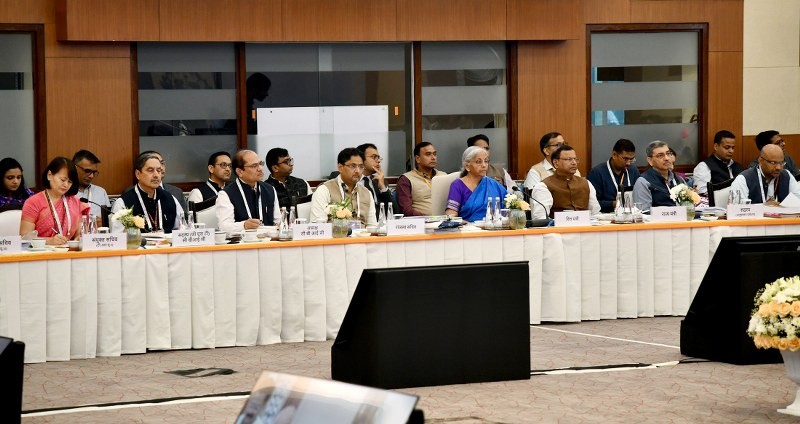
New Delhi: The GST Council meeting on Wednesday was expected to wrap up in the usual manner, but it turned into a lengthy standoff fraught with confrontation as opposition-ruled states resisted tax rate cuts.
According to an India Today report, officials indicated that the government had prepared carefully in the run-up, with Finance Minister Nirmala Sitharaman holding several rounds of consultations over the last six months to smooth the way for rate rationalisation.
Prime Minister Narendra Modi had directed that benefits must reach the poor and middle class without delay, while Home Minister Amit Shah separately engaged with states to address revenue concerns and avert a political row.
Despite this groundwork, consensus proved elusive when the council met.
Opposition-led states — West Bengal, Punjab, Kerala and Karnataka — opposed tax reductions citing possible revenue erosion.
The meeting, meant to conclude by 7 p.m., extended well past 9:30 p.m.
Punjab and West Bengal later softened their positions, but Kerala and Karnataka continued to press for compensation guarantees and even tried to push the matter to the following day.
At that point, Sitharaman is learnt to have made clear she would not allow postponement.
She reportedly told members she was prepared to stay through the night if necessary, but that relief for citizens could not be delayed.
The deadlock continued until Chhattisgarh Finance Minister O.P. Choudhary proposed a vote — only the second in the council’s history, the first having been on lottery taxation.
The idea unsettled opposition states, who feared the optics of blocking tax relief, the report said.
According to sources, West Bengal eventually played a role in persuading Kerala and Karnataka to relent, paving the way for agreement.
To reassure states, Sitharaman reminded them that revenues were shared: gesturing to the council table, she said the funds there belonged to both Centre and states. “If states lose, the Centre loses too,” she added, while stressing that “today, the people must get relief.”
With resistance overcome, Sitharaman announced what she described as the most sweeping revamp of GST since its inception.
Dubbed “GST 2.0,” the reform establishes a simplified two-slab structure, reduces rates on everyday items, medicines, and automobiles, and introduces a higher rate tier for luxury and sin goods.
Support Our Journalism
We cannot do without you.. your contribution supports unbiased journalism
IBNS is not driven by any ism- not wokeism, not racism, not skewed secularism, not hyper right-wing or left liberal ideals, nor by any hardline religious beliefs or hyper nationalism. We want to serve you good old objective news, as they are. We do not judge or preach. We let people decide for themselves. We only try to present factual and well-sourced news.
Support objective journalism for a small contribution.