 New Education Policy
New Education Policy will be remembered as shining example of participative governance: PM Modi
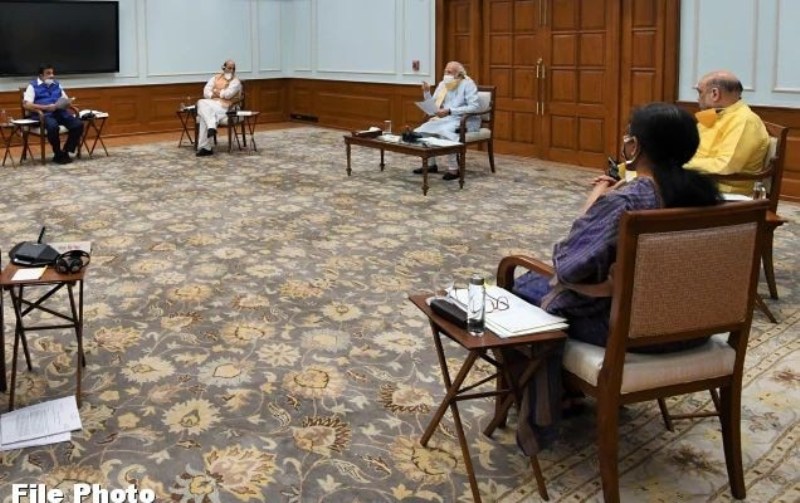
New Delhi/IBNS: Prime Minister Narendra Modi on Wednesday "wholeheartedly welcomed" the approval of the New Education Policy, 2020, terming it as a long due and much-awaited reform in the education sector.
"I wholeheartedly welcome the approval of the National Education Policy 2020! This was a long due and much awaited reform in the education sector, which will transform millions of lives in the times to come!" he wrote in a tweet.
He said the New Education Policy would be remembered as a shining example of participatory governance.
"Framing of NEP 2020 will be remembered as a shining example of participative governance. I thank all those who have worked hard in the formulation of the NEP 2020. May education brighten our nation and lead it to prosperity," he wrote in a tweet.
Framing of NEP 2020 will be remembered as a shining example of participative governance. I thank all those who have worked hard in the formulation of the NEP 2020.
— Narendra Modi (@narendramodi) July 29, 2020
May education brighten our nation and lead it to prosperity.
The Union Cabinet on Wednesday approved the New Education Policy 2020 that envisages major reforms in higher education, including target of 50 per cent gross enrollment ratio by 2035 and provision for multiple entry/exit.
The policy has emphasised mother tongue/local language/regional language as the medium of instruction at least till Grade 5, but preferably till Grade 8 and beyond.
Sanskrit to be offered at all levels of school and higher education as an option for students, including in the three-language formula. Other classical languages and literatures of India also to be available as options.
No language will be imposed on any student. Students to participate in a fun project/activity on ‘The Languages of India’, sometime in Grades 6-8, such as, under the ‘Ek Bharat Shrestha Bharat’ initiative.
Reacting to the same, Modi tweeted: "Respecting the spirit ‘Ek Bharat Shreshtha Bharat’, the NEP 2020 includes systems to promote Indian languages, including Sanskrit. Many foreign languages will also be offered at the secondary level. Indian Sign Language (ISL) will be standardised across the country."
Respecting the spirit ‘Ek Bharat Shreshtha Bharat’, the NEP 2020 includes systems to promote Indian languages, including Sanskrit. Many foreign languages will also be offered at the secondary level.
— Narendra Modi (@narendramodi) July 29, 2020
Indian Sign Language (ISL) will be standardised across the country.
The school curricula and pedagogy will aim for holistic development of learners by equipping them with the key 21st century skills, reduction in curricular content to enhance essential learning and critical thinking and greater focus on experiential learning. Students will have increased flexibility and choice of subjects.
The policy offers both formal and non-formal education modes, association of counselors or well-trained social workers with schools, open learning for classes 3,5 and 8 through NIOS and State Open Schools, secondary education programs equivalent to Grades 10 and 12, vocational courses, adult literacy and life-enrichment programs.
Commenting on the same, PM Mod said: "Aspects such as widening the availability of scholarships, strengthening infrastructure for Open and Distance Learning, Online Education and increasing the usage of technology have received great attention in the NEP. These are vital reforms for the education sector."
Aspects such as widening the availability of scholarships, strengthening infrastructure for Open and Distance Learning, Online Education and increasing the usage of technology have received great attention in the NEP. These are vital reforms for the education sector.
— Narendra Modi (@narendramodi) July 29, 2020
NEP 2020 emphasizes on ensuring universal access to school education at all levels- pre school to secondary.
Besides, with emphasis on Early Childhood Care and Education, the 10+2 structure of school curricula is to be replaced by a 5+3+3+4 curricular structure corresponding to ages 3-8, 8-11, 11-14, and 14-18 years respectively.
(Image Credit: Narendra Modi Twitter Handle)
Support Our Journalism
We cannot do without you.. your contribution supports unbiased journalism
IBNS is not driven by any ism- not wokeism, not racism, not skewed secularism, not hyper right-wing or left liberal ideals, nor by any hardline religious beliefs or hyper nationalism. We want to serve you good old objective news, as they are. We do not judge or preach. We let people decide for themselves. We only try to present factual and well-sourced news.
Support objective journalism for a small contribution.