 LPG Crisis
Iran war disrupts LPG supplies, restaurants in major Indian cities edge towards shutdown
A conflict unfolding nearly 3,000 kilometres away in Iran is beginning to affect daily life in India, particularly the hospitality sector.
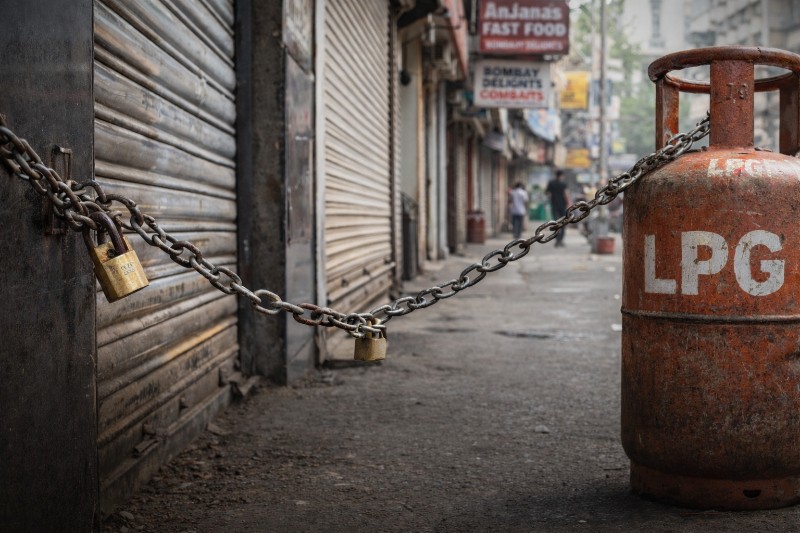
Restaurants and hotels across cities such as Mumbai, Bengaluru, Chennai and Lucknow are struggling to secure commercial LPG cylinders as the war disrupts global energy supply routes.
The situation has worsened due to the effective closure of the Strait of Hormuz, a crucial global energy shipping channel.
The disruption has slowed the movement of LPG supplies, triggering shortages across several parts of India.
Over the past few days, long queues have been seen outside LPG distribution centres as supply uncertainties grow.
While households have begun noticing delays in cylinder deliveries, restaurants and hotels that rely heavily on commercial LPG are facing a much sharper crisis.
India’s dependence on imported LPG
India’s heavy reliance on imported LPG lies at the centre of the crisis.
The country imports more than 60 percent of its domestic LPG requirement, making it vulnerable to disruptions in global supply chains.
Nearly 85 to 90 percent of these imports pass through the Strait of Hormuz, one of the world’s most strategically important maritime routes.
Any conflict or blockade affecting this corridor immediately impacts energy shipments to India.
India consumes roughly 31 million tonnes of LPG each year, and around 87 percent of this supply is used by households for domestic cooking.
The remaining portion is allocated to commercial users, including hotels, restaurants and other businesses.
Because domestic consumption receives priority during shortages, commercial establishments often face the earliest disruptions.
Hospitality sector feels immediate impact
With the Iran conflict entering its second week, the hospitality sector has started experiencing the effects of reduced commercial LPG supply.
Restaurants depend heavily on commercial cylinders to operate their kitchens, and many establishments lack alternatives such as piped natural gas (PNG) connections or large-scale electric cooking systems.
As supplies shrink, restaurant owners fear that popular dishes like vada pav, idli or masala dosa could either become more expensive or temporarily disappear from menus if the crisis continues.
The supply disruption is affecting not only metropolitan centres but also smaller cities and towns, including Pune and Puducherry.
Mumbai restaurants face possible shutdown
Mumbai appears to be among the hardest-hit cities. According to the Indian Hotel & Restaurant Association (AHAR) Mumbai, nearly 20 percent of hotels and restaurants in the city have already suspended operations due to the shortage of commercial LPG.
The association has warned that the number could rise sharply if supplies do not resume soon.
It estimates that as many as 50 percent of establishments may shut within the next two days if the situation fails to improve.
In response to dwindling fuel supplies, many eateries in areas such as Dadar and Andheri have begun reducing their menus.
Several restaurants have also shortened operating hours to conserve the limited gas cylinders they still possess.
Industry representatives believe that the government’s decision to prioritise domestic cooking gas supplies may also be contributing to the shortage faced by commercial establishments.
Government prioritises domestic supply
On Monday, the central government invoked the Essential Commodities Act to ensure uninterrupted LPG supply to households.
Under this measure, domestic cooking gas distribution receives priority during the ongoing supply disruption.
At the same time, LPG meant for non-domestic use is being diverted to essential services such as hospitals and educational institutions.
Restaurant owners have reported that commercial LPG deliveries have largely stopped since Sunday, worsening the pressure on the hospitality industry.
Bengaluru’s hospitality industry under pressure
The situation in Bengaluru mirrors the crisis seen in Mumbai.
The Bangalore Hotels Association has warned that restaurants across the city could begin facing operational disruptions starting Tuesday (March 10).
According to the association, the sudden halt in supply came as a surprise because oil companies had earlier assured businesses that LPG availability would remain stable for around 70 days.
Chennai restaurants running out of gas
Restaurants in Chennai are confronting a similar challenge.
The Chennai Hotel Association has reported that commercial LPG distributors have stopped supplying cylinders, citing a lack of stock.
In a letter addressed to Prime Minister Narendra Modi and Petroleum Minister Hardeep Singh Puri, the association warned that many restaurants have already been forced to suspend operations due to the shortage.
Respected Sir,@PMOIndia @narendramodi@HardeepSPuri
— Chennai Hotel Association (@ChennaiHotelAs1) March 9, 2026
The situation has now become even more critical. Commercial LPG distributors have completely stopped supplying cylinders, stating that they have no stock available. As a result, many restaurants are forced to shut down 👇 📣 pic.twitter.com/1deODRzni4
Some establishments have responded by reducing menu offerings and limiting business hours.
Well-known eateries such as Hotel Annapoorna have scaled back their operations to stretch the remaining gas supply.
Centre announces measures to address shortage
Despite the disruptions, the central government has maintained that there is no overall shortage of LPG in the country.
Authorities have instructed refineries to increase production and divert additional output towards domestic consumption.
To discourage hoarding, the government has also extended the LPG booking interval from 21 days to 25 days.
Meanwhile, prices have risen amid the supply pressures.
The cost of a domestic LPG cylinder has increased by Rs 60, pushing the price in Delhi to Rs 913, while commercial cylinders used by restaurants have also become more expensive, with prices rising by Rs 114.5.
To address complaints from the hospitality sector, the government has formed a committee consisting of three executive directors from oil marketing companies.
The panel will review requests for commercial LPG supplies.
However, the National Restaurant Association of India has said that the ground situation remains difficult.
The organisation stated that although the government has clarified there is no formal ban on supplying commercial LPG cylinders to restaurants, distributors continue to report that they cannot provide fresh stock.
For restaurant owners across India, the ongoing conflict in West Asia has already moved far beyond geopolitics — it is now a crisis playing out daily in kitchens struggling to keep their stoves burning.
Support Our Journalism
We cannot do without you.. your contribution supports unbiased journalism
IBNS is not driven by any ism- not wokeism, not racism, not skewed secularism, not hyper right-wing or left liberal ideals, nor by any hardline religious beliefs or hyper nationalism. We want to serve you good old objective news, as they are. We do not judge or preach. We let people decide for themselves. We only try to present factual and well-sourced news.
Support objective journalism for a small contribution.