 Supreme Court
CM 'barging in' during raids not a 'happy situation': SC questions Mamata’s role in I-PAC case
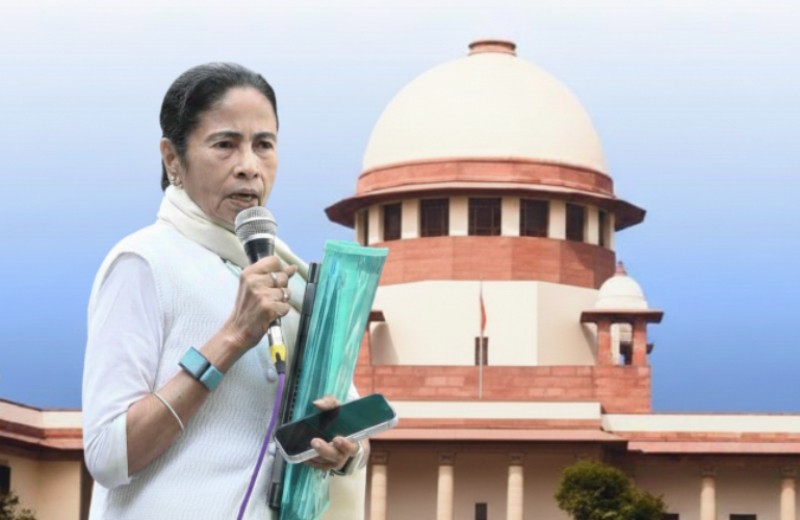
New Delhi/IBNS: The Supreme Court has raised serious concerns over the presence of West Bengal Chief Minister Mamata Banerjee during an Enforcement Directorate (ED) raid linked to the I-PAC case, describing the situation as “not a happy one”.
A bench comprising Justices Prashant Kumar Mishra and NV Anjaria questioned the legal implications of such an incident and whether central agencies would have any remedy in similar situations.
SC flags ‘unusual’ situation
While hearing a petition filed by the Enforcement Directorate, the court observed that the circumstances surrounding the raid were highly unusual.
The bench questioned what recourse would be available if a Chief Minister were to intervene in an ongoing operation by a central agency.
It raised concerns about the possibility of similar incidents occurring in the future and emphasised that there should not be any legal vacuum in addressing such matters.
The judges remarked that if existing constitutional provisions do not offer a clear remedy, the issue requires careful judicial consideration.
ED alleges ‘gross abuse of power’
The Enforcement Directorate has accused Mamata Banerjee of interfering with its operation during a raid at premises linked to I-PAC, including the residence of its chief, Pratik Jain.
According to the agency, the Chief Minister allegedly left the premises with electronic devices and documents during the operation.
The ED has termed the incident a “gross abuse of power” and has sought legal action against Banerjee and officials accompanying Mamata Banerjee.
The agency approached the Supreme Court seeking clarity on whether it could initiate proceedings against a state government in such circumstances.
Debate over federal structure
Representing the West Bengal government, senior advocate Shyam Divan argued that allowing a central agency to directly file a petition against a state government could undermine India’s federal structure.
He contended that agencies such as the Central Bureau of Investigation, Narcotics Control Bureau, Directorate of Revenue Intelligence, and Serious Fraud Investigation Office do not possess the authority to initiate legal action against state governments.
Divan maintained that granting such powers could open the door to excessive inter-governmental litigation and disrupt the constitutional balance between the Centre and the states.
Court questions legal remedies
The bench, however, pointed out that situations involving direct obstruction of central agencies by state authorities could not be ignored.
Justice Mishra raised the question of who would adjudicate such disputes if neither Article 226 nor Article 32 of the Constitution is applicable in these cases.
He stressed the need to ensure that a legal mechanism exists to address such extraordinary scenarios.
Divan responded that the Constitution does provide avenues for resolution, suggesting that the Union government itself could initiate appropriate proceedings rather than allowing individual departments to approach the courts independently.
'Larger bench may decide key issue'
The state’s counsel further argued that the issue involves significant constitutional questions and may require interpretation by a larger bench of the Supreme Court.
He cautioned that permitting central agencies to invoke writ jurisdiction directly could set a precedent that might affect the federal balance and lead to increased legal conflicts between governments.
The matter is scheduled for further hearing on March 24, with the court expected to examine the broader constitutional implications of the case.
Support Our Journalism
We cannot do without you.. your contribution supports unbiased journalism
IBNS is not driven by any ism- not wokeism, not racism, not skewed secularism, not hyper right-wing or left liberal ideals, nor by any hardline religious beliefs or hyper nationalism. We want to serve you good old objective news, as they are. We do not judge or preach. We let people decide for themselves. We only try to present factual and well-sourced news.
Support objective journalism for a small contribution.