 Pakistan
Canada’s diversion tactics: How Pakistan’s role in Khalistani extremism is being ignored
In recent months, a diplomatic storm has emerged between India and Canada, with Canadian Prime Minister Justin Trudeau making headlines by accusing Indian diplomats of interference and espionage on Canadian soil.
This narrative has been widely supported by the Canadian government and echoed in Western media.
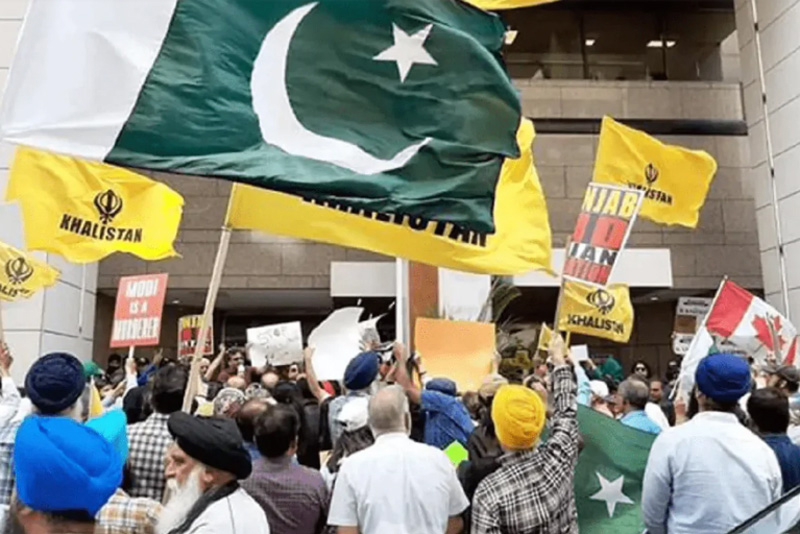
Yet, what remains conspicuously underreported is the crucial role Pakistan has played in fueling the Khalistani separatist movement, which seeks to split India by violent means.
Trudeau’s focus on India’s alleged actions seems to be a convenient distraction, obscuring the real orchestrator behind the scenes: Pakistan.
As journalist Francesca Marino has pointed out, Khalistani separatists, despite claiming to seek an independent Punjab, have curiously never targeted Lahore, the historic capital of Punjab—now part of Pakistan. This omission is not a coincidence but a reflection of the reality that Pakistan’s intelligence agencies have been quietly supporting and sustaining the Khalistani movement for decades. The Pakistani establishment has long sought to undermine India’s territorial integrity, and in Canada, it has found fertile ground for nurturing this separatist cause.
The Canadian Security Intelligence Service (CSIS) itself has acknowledged Pakistan’s interference. Senior CSIS officer Vanessa Lloyd testified that Pakistan’s involvement is “consistently in balance with trying to reduce the influence of India” and is “directly related to the support of Khalistani extremism.”
Despite this damning admission, Canada seems intent on downplaying Pakistan’s involvement while inflating the threat posed by Indian diplomats who are merely doing their job: protecting India’s national interests and monitoring hostile elements.
The Khalistani movement, far from being a grassroots call for Sikh self-determination, is an engineered, Pakistan-sponsored effort to destabilize India. Pakistan’s support for these extremists is not an isolated endeavor; it is part of a broader strategy aimed at countering India’s influence globally, especially in regions where significant Sikh populations reside, such as Canada. The disturbing irony is that while Trudeau’s government maligns Indian diplomats for allegedly spying on Khalistani extremists, it turns a blind eye to the more insidious involvement of Pakistan, which seeks to destabilize an entire region.
Trudeau’s selective outrage raises serious questions about his government’s motives. Why has Canada chosen to elevate the actions of Indian diplomats, who, like any nation’s envoys, are tasked with protecting their country’s interests, while ignoring Pakistan’s well-documented interference? The Canadian media, too, has played a part in amplifying this narrative, frequently portraying India as the villain while disregarding the role Pakistan has played in stoking the fires of extremism.
Canadian law enforcement, particularly the Royal Canadian Mounted Police (RCMP), has doubled down on this anti-India rhetoric. A recent RCMP statement claimed that Indian diplomats were engaged in clandestine activities, accusing them of collecting information on Khalistani extremists and sharing it with gangsters—a charge that is not only specious but also incredibly self-serving. Indian diplomats, like all envoys worldwide, have a duty to keep tabs on hostile forces, especially when those forces threaten their homeland’s security and sovereignty.
Kanwal Sibal, India’s former foreign secretary, aptly summarized the absurdity of the Canadian government’s stance. In a post on X (formerly Twitter), he remarked, “To treat the Indian mission keeping track of anti-Indian Sikh extremists as complicity in transnational repression is unspeakably absurd.” Every nation’s diplomats are tasked with gathering information on threats that could harm their country, and to condemn Indian envoys for fulfilling this obligation is hypocritical at best.
What’s more troubling is Canada’s apparent projection of its own actions onto India. Reports suggest that Canadian diplomats have actively worked to radicalize sections of the Sikh diaspora in Punjab, supporting the so-called farmers’ protests and promoting a human rights narrative to malign the Indian government. This double standard speaks volumes about the political calculus behind Trudeau’s diplomatic row with India. By framing India as the aggressor, Trudeau diverts attention away from the uncomfortable reality of Pakistan’s deep involvement in fostering the Khalistani movement.
This distraction has significant geopolitical implications. The U.S., eager to keep India in check as a rising global power, has also largely looked the other way when it comes to Pakistan’s meddling in the Khalistani cause. By allowing this narrative to dominate the discourse, the West risks undermining regional stability in South Asia and emboldening extremist elements that could have far-reaching consequences.
The fact remains that Khalistani unrest in Canada is not just a problem for India; it has the potential to destabilize the Punjab region and reignite violence in a state that has worked hard to recover from the scars of separatist insurgency. By ignoring the real puppet master behind the Khalistani movement—Pakistan—Trudeau is not just doing a disservice to India, but to his own country and the cause of global security.
In the end, Trudeau’s attempts to cast India as the villain serve as a smokescreen, one that conveniently deflects attention from his government’s inability to address Pakistan’s role in perpetuating extremism on Canadian soil. This narrative, amplified by Western media, not only distorts the truth but risks turning a diplomatic spat into a much larger global issue—one with dangerous consequences for both Canada and the wider world.
(Image and text courtesy: Khalsavox.com)
Support Our Journalism
We cannot do without you.. your contribution supports unbiased journalism
IBNS is not driven by any ism- not wokeism, not racism, not skewed secularism, not hyper right-wing or left liberal ideals, nor by any hardline religious beliefs or hyper nationalism. We want to serve you good old objective news, as they are. We do not judge or preach. We let people decide for themselves. We only try to present factual and well-sourced news.
Support objective journalism for a small contribution.