

 Black Mass
India bans export of lithium-ion battery black mass: What it means for EVs and critical minerals
The Indian government has prohibited the export of lithium-ion battery black mass, classified under ITC (HS) Code 85491400, with immediate effect.
“Vide Notification No. 49/2026-27 dated November 10, 2026, the export policy of the item has been amended from ‘Free’ to ‘Prohibited’ with immediate effect and until further orders,” the government said in a statement.
The transitional arrangements under Para 1.05 of the Foreign Trade Policy (FTP), 2023, will apply.
ITC (HS) Code 85491400 covers waste and scrap of primary cells, primary batteries and electric accumulators, as well as spent cells, batteries and accumulators that are unsorted and do not contain lead, cadmium or mercury. The notification specifically identifies the restricted item as lithium-ion battery black mass.
What is black mass?
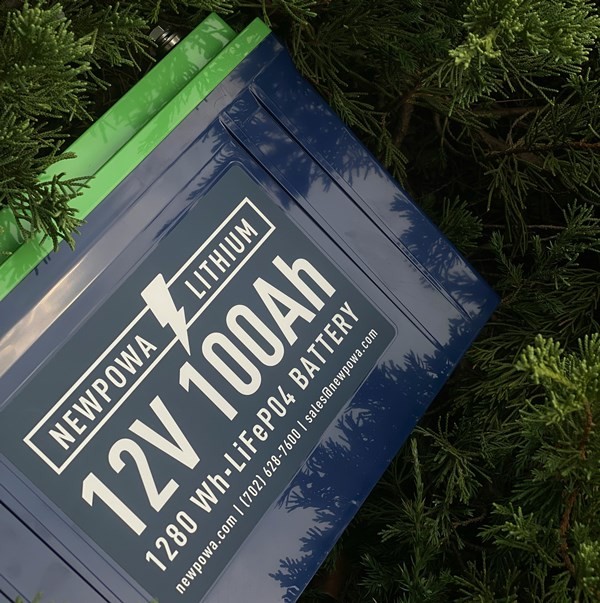
Black mass is the powder-like material produced by shredding end-of-life lithium-ion batteries and battery manufacturing waste. It contains recoverable quantities of critical minerals, including lithium, cobalt, nickel and manganese.
These minerals are essential inputs for electric mobility, advanced chemistry cell batteries, energy storage, electronics and renewable energy technologies.
India remains substantially dependent on imports for several of these resources, making battery-waste recycling an important route to developing a domestic supply of critical minerals.
Although India's capacity to recycle battery waste and recover critical minerals from it has expanded considerably, the sector has not been able to fully utilise its potential due to inadequate availability of feedstock.
Exports of domestically generated black mass divert this valuable secondary resource overseas. At the same time, some domestic recyclers have had to import black mass to meet their processing requirements.
The export prohibition is intended to ensure that black mass generated in India is recycled and refined within the country. The measure is expected to secure feedstock supplies for domestic recycling and refining units, improve capacity utilisation and encourage further investment and employment in the sector.
It is also expected to increase the domestic recovery of lithium, cobalt, nickel and other critical minerals, thereby reducing import dependence and the associated foreign exchange outgo. The move could strengthen supply chains for battery manufacturing, electric vehicles, energy storage and clean-energy technologies, in line with the government's vision of Aatmanirbhar Bharat.
Further, retaining black mass within the country is expected to advance the circular economy and the concept of ‘urban mining’, reducing dependence on primary mining while supporting the environmentally sound recycling of this hazardous material in accordance with applicable regulations.
The measure complements the government's initiatives under the National Critical Mineral Mission (NCMM). These include the ₹1,500-crore Incentive Scheme approved by the Union Cabinet in September 2025 to develop recycling capacity for the separation and production of critical minerals from secondary sources such as battery waste and electronic waste.
Retaining black mass domestically will help ensure that recycling capacity being developed under the scheme has access to an adequate supply of feedstock.
The move is also in line with measures adopted by several major economies to retain critical-mineral-bearing battery waste and black mass for domestic processing.
Support Our Journalism
We cannot do without you.. your contribution supports unbiased journalism
IBNS is not driven by any ism- not wokeism, not racism, not skewed secularism, not hyper right-wing or left liberal ideals, nor by any hardline religious beliefs or hyper nationalism. We want to serve you good old objective news, as they are. We do not judge or preach. We let people decide for themselves. We only try to present factual and well-sourced news.
Support objective journalism for a small contribution.