


Zooplankton resilient to long-term warming, finds study
The results are published today in the journal Global Change Biology.
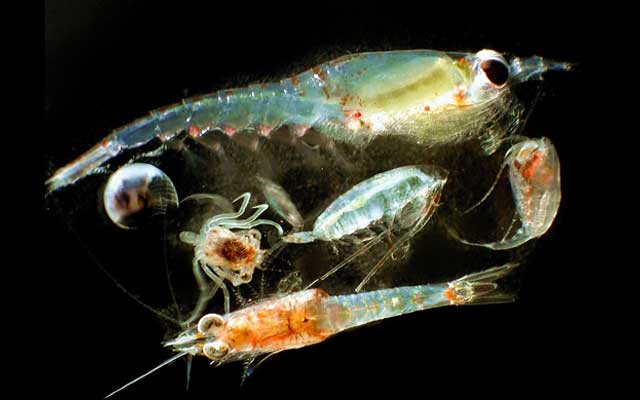
The team studied the spatial distribution of the zooplankton communities, which are dominated by copepods such as Calanus propinquus, and their abundance in relation to sea surface temperatures between two distinct periods around 60 years apart.
By examining net samples and in situ temperature records from recent ship expeditions (1996-2013) and from the well-regarded Discovery Investigations (1926-1938), they show that although the sea surface temperature increased by 0.74 degrees C, the geographic location of the plankton remained the same.
Lead author, Professor Geraint Tarling, from British Antarctic Survey, says: “We were expecting to find a major poleward migration of the zooplankton community, as has happened in the Arctic. The fact that the community remained in the same place despite almost a degree of warming over the past six decades shows they are far more resilient than we first thought.”
Image:wikimedia commons
Support Our Journalism
We cannot do without you.. your contribution supports unbiased journalism
IBNS is not driven by any ism- not wokeism, not racism, not skewed secularism, not hyper right-wing or left liberal ideals, nor by any hardline religious beliefs or hyper nationalism. We want to serve you good old objective news, as they are. We do not judge or preach. We let people decide for themselves. We only try to present factual and well-sourced news.
Support objective journalism for a small contribution.


