


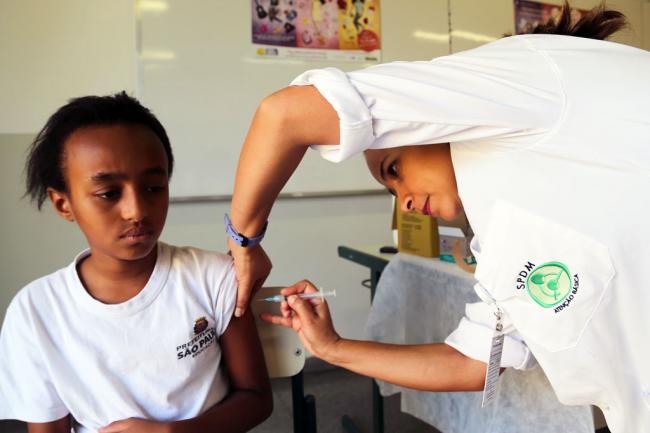
With focus on cervical cancer, Ban says where people live should not determine chances of survival
“We must do more to end the many tragedies that cancer inflicts,” said Ban in hismessage on the Day. “About one third of cancers can be prevented, while others are curable if diagnosed and treated early. And even when cancer is advanced, patients should benefit from palliative care,” he said.
Although cancer affects all countries, the UN chief underlined that those with fewer resources are hit hardest. “Nothing illustrates this better than the burden of cervical cancer. The world's poorest countries are home to more than 8 in 10 women newly diagnosed with cervical cancer, and 9 in 10 deaths from the disease.”
While applauding the success of cervical cancer screening in many high-income countries, the Secretary-General insisted that the global community has a responsibility to replicate this progress in low-income States, where cervical cancer remains one of the most common cancers among women.
“Today, we have the knowledge, experience and tools to protect every woman, everywhere,” he stated. “Comprehensive cervical cancer prevention includes vaccines to protect girls against future infection with the human papilloma virus (HPV), screening measures and preventive treatment of pre-cancers,” he explained.
This year's World Cancer Day was described by Ban as having “special impetus” thanks to the recent adoption of the 2030 Agenda for Sustainable Development, which aims “to usher in a life of dignity for all people.”
The 2030 Agenda for Sustainable Development endorsed by all UN Member States call for reducing by one third premature death from non-communicable diseases. The UN chief also mentioned the Every Woman Every Child movement, which is an example of an initiative working to develop stronger health systems, universal health care coverage and the scale up of life-saving interventions for comprehensive cancer prevention and control.
“On World Cancer Day, let us resolve to end the injustice of preventable suffering from this disease as part of our larger push to leave no one behind,” concluded Ban.
Photo: PAHO/WHO
Support Our Journalism
We cannot do without you.. your contribution supports unbiased journalism
IBNS is not driven by any ism- not wokeism, not racism, not skewed secularism, not hyper right-wing or left liberal ideals, nor by any hardline religious beliefs or hyper nationalism. We want to serve you good old objective news, as they are. We do not judge or preach. We let people decide for themselves. We only try to present factual and well-sourced news.
Support objective journalism for a small contribution.


