


With age comes hearing loss and a greater risk of cognitive decline: Study
Washington, Feb 13 (IBNS): Hearing impairment is a common consequence of advancing age.
Almost three-quarters of U.S. adults age 70 and older suffer from some degree of hearing loss.
One unanswered question has been to what degree hearing impairment intersects with and influences age-related cognitive decline.
In a new study, researchers at University of California San Diego School of Medicine report that hearing impairment is associated with accelerated cognitive decline with age, though the impact of mild hearing loss may be lessened by higher education.
The findings are published in the February 12, 2019 issue of the Journal of Gerontology: Series A Medical Sciences.
A team of scientists, led by senior author Linda K. McEvoy, PhD, professor in the departments of Radiology and Family Medicine and Public Health, tracked 1,164 participants (mean age 73.5 years, 64 percent women) in the longitudinal Rancho Bernardo Study of Healthy Aging for up to 24 years.
All had undergone assessments for hearing acuity and cognitive function between the years 1992 to 1996 and had up to five subsequent cognitive assessments at approximately four-year intervals. None used a hearing aid.
The researchers found that almost half of the participants had mild hearing impairment, with 16.8 percent suffering moderate-to-severe hearing loss.
Those with more serious hearing impairment showed worse performance at the initial visit on a pair of commonly used cognitive assessment tests: the Mini-Mental State Exam (MMSE) and the Trail-Making Test, Part B. Hearing impairment was associated with greater decline in performance on these tests over time, both for those with mild hearing impairment and those with more severe hearing impairment.
However, the association of mild hearing impairment with rate of cognitive decline was modified by education.
Mild hearing impairment was associated with steeper decline among study participants without a college education, but not among those with higher education.
Moderate-to-severe hearing impairment was associated with steeper MMSE decline regardless of education level.
“We surmise that higher education may provide sufficient cognitive reserve to counter the effects of mild hearing loss, but not enough to overcome effects of more severe hearing impairment,” said McEvoy.
Degree of social engagement did not affect the association of hearing impairment with cognitive decline. “This was a somewhat unexpected finding” said first author Ali Alattar. “Others have postulated that cognitive deficits related to hearing impairment may arise from social isolation, but in our study, participants who had hearing impairment were as socially engaged as those without hearing loss.”
The findings, said the authors, emphasize the need for physicians to be aware that older patients with hearing impairments are at greater risk for cognitive decline. They also emphasized the importance of preventing hearing loss at all ages, since hearing impairment is rarely reversible. One important way to protect hearing, they said, is to minimize loud noise exposure since this is the largest modifiable risk factor for hearing impairment.
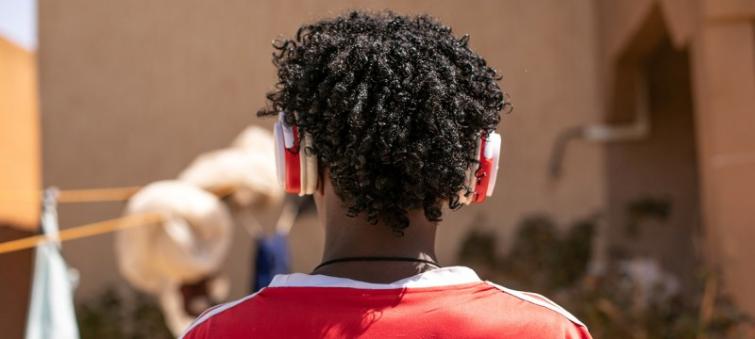
Image: UN website
Support Our Journalism
We cannot do without you.. your contribution supports unbiased journalism
IBNS is not driven by any ism- not wokeism, not racism, not skewed secularism, not hyper right-wing or left liberal ideals, nor by any hardline religious beliefs or hyper nationalism. We want to serve you good old objective news, as they are. We do not judge or preach. We let people decide for themselves. We only try to present factual and well-sourced news.
Support objective journalism for a small contribution.


