


 WHO
WHO
WHO calls for action to protect, support and expand global health force
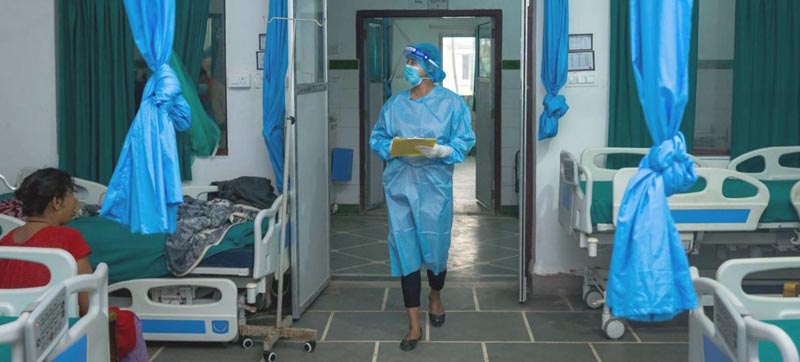
New York: Ahead of its 75th anniversary on Friday, the World Health Organization (WHO) is calling for countries to both address inequities in care and protect the workers who provide it, many of whom are burned out from the COVID-19 pandemic.
The world has witnessed extraordinary health gains since the UN agency was established, including smallpox eradication, the near elimination of polio, and declines in maternal mortality. Millions of young lives have also been saved through childhood immunization.
“The history of WHO demonstrates what is possible when nations come together for a common purpose,” Director-General Tedros Adhanom Ghebreyesus said in a statement on Monday.
Major gaps, climate threat
Although there is much to be proud of, Tedros pointed to the work that remains to achieve WHO’s founding vision of a world where all people attain the highest standard of health.
“We continue to face vast inequities in access to health services, major gaps in the world’s defences against health emergencies, and threats from health-harming products and the climate crisis,” he said.
To meet these challenges, WHO is urging governments to take urgent action to protect, support and expand the health workforce.
Projected health worker shortage
Investments in education, skills and decent jobs must be prioritized to meet the rapidly growing demand for care and avert a projected shortage of 10 million health workers by 2030, mainly in developing countries.
WHO recently announced a global education programme on basic emergency care targeting 25 per cent of nurses and midwives from 25 low- and middle-income countries by the end of 2025.
A new appreciation
On Monday, Tedros also delivered opening remarks to the 5th Global Forum on Human Resources for Health in Geneva. Over 3,000 delegates from more than 140 countries are attending the three-day event, which coincides with World Health Worker Week and WHO’s 75th anniversary.
He again stressed that the vision of attaining the highest possible level of health for all can only be achieved with an adequate and well-supported health workforce.
Tedros said COVID-19 has given the world a new appreciation for the incredible value of health workers, who “worked day in and day out to protect us”. They, and the health systems they work in, are badly over-stretched.
Millions of health and care workers were infected during the pandemic, he said. Thousands died, and many are simply exhausted from over-work.
Anxiety, depression and burnout
Furthermore, severe disruptions to health systems during the global crisis have led to excess mortality and avoidable deaths in many countries, reversing previous health gains.
“The single largest cause of disrupted health services during the pandemic was the shortage of health workers. And the single largest barrier to delivering vaccines and other life-saving tools to combat COVID-19 was the shortage of health workers,” he said.
Tedros reported that since the onset of the pandemic, more than one in three health and care workers have suffered from anxiety and depression, and around half have experienced burnout.
“Workers are giving voice to their struggle,” he continued. “Strikes and industrial action are at record levels: dissatisfaction with working conditions is reported in more than 160 countries.”
Honour the legacy
Tedros underscored the need to protect health workers, including through upholding their labour rights. He also encouraged countries to invest in decent working conditions for the sector, fair pay, and training and leadership.
The role of women must be addressed, he added, as they account for two-thirds of the health and care workforce.
“Too few women are in senior positions in the health sector, and there is a 24 per cent gender pay gap. The glass ceiling must be smashed,” he said.
The WHO chief called for all countries to work together, as the job should not just fall to Ministries of Health alone.
“We all have a role to play,” said Tedros. “There is no better way to honour the legacy of health and care workers who have lost their lives to COVID-19, or have faced unprecedented challenges, than to protect, invest, together.”
Support Our Journalism
We cannot do without you.. your contribution supports unbiased journalism
IBNS is not driven by any ism- not wokeism, not racism, not skewed secularism, not hyper right-wing or left liberal ideals, nor by any hardline religious beliefs or hyper nationalism. We want to serve you good old objective news, as they are. We do not judge or preach. We let people decide for themselves. We only try to present factual and well-sourced news.
Support objective journalism for a small contribution.


