


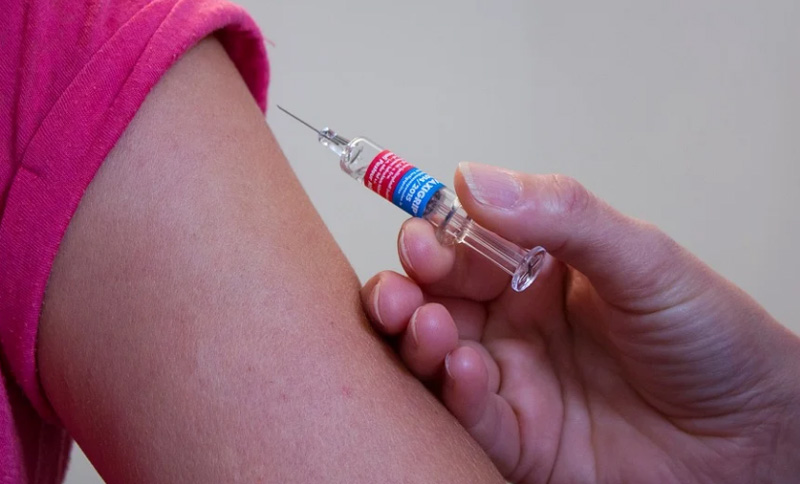
 Vaccination
Up to 70 percent of world population can be vaccinated against COVID-19 by 2023: World Bank President
Washington/UNI/Sputnik: Up to 70% of the world population can be vaccinated against COVID-19 by the end of 2022 if the delivery of vaccine doses can be accelerated by donor nations to the countries that need them most, World Bank President David Malpass said in an interview with CNBC.
"By the end of this year, we’d like to see 40% vaccinated, and by the end of next year, 60% or even 70% vaccinated (across) the world," Malpass said on Monday. "But the challenge is what you do in October, November and December. The countries need advance notice of which vaccines are going to be arriving. And that's been a big challenge, the transparency of their delivery schedules. We have called on the manufacturers to try and make that more clear."
Malpass, who also serves as chairman of a global task force of multilateral agencies coordinating vaccine deliveries, said his focus was on getting the doses supplied as quickly as possible to the developing world where they were in short supply.
"The critical thing is for the advanced economies … that have committed to the donations to accelerate the delivery schedules," he said.
"We've advocated that they swap their near-term deliveries that they don't need - the data shows there’s 2.5 million excess doses that's going to be coming online in the advanced economies - and so the critical thing is to take the early delivery schedules and make them available to developing countries," he said.
While huge vaccine donations have been announced, the reality of the situation was that actual deliveries into the developing world have been small, resulting in only 2% of vaccinations, Malpass said.
"The good news is there’s a huge amount of volume of production from the advanced economies side. We were talking about even by the end of this year, billions of doses," he added.
Support Our Journalism
We cannot do without you.. your contribution supports unbiased journalism
IBNS is not driven by any ism- not wokeism, not racism, not skewed secularism, not hyper right-wing or left liberal ideals, nor by any hardline religious beliefs or hyper nationalism. We want to serve you good old objective news, as they are. We do not judge or preach. We let people decide for themselves. We only try to present factual and well-sourced news.
Support objective journalism for a small contribution.


