October 06, 2026 01:39 am (IST)

Follow us:


UN voices concern over gaps in maternity, paternity protections
New York, May 14 (IBNS): Despite progress in maternity benefits and a positive trend in supporting new fathers, at least 830 million women workers still do not have adequate protection, the United Nations labour agency on Tuesday reported.
“In order to have gender equality, you must have maternity protection. And if you don’t have equality at home, it will be an uphill battle to have it at work. That’s where paternity benefits, childcare and other work-family policies come in,” said Shauna Olney, Chief of the International Labour Organization’s (ILO) Gender, Equality and Diversity Branch.
In its report, Maternity and Paternity at Work: Law and practice across the world, the ILO said 66 countries out of 185 countries and territories have committed to at least one of three maternity protection Conventions adopted in 1919, 1952 and in 2000.
In addition, 111 out of 160 countries have laws on dangerous or unhealthy work affecting pregnant or nursing women, and 78 set out explicit prohibitions against such work.
Besides maternity protection legislation, many countries also have measures to support working fathers.
Of the 167 countries studied, 78 stipulate a statutory right to paternity leave, which is often paid, underlining the trend of fathers’ greater involvement around childbirth.
Leave provisions for fathers are most common in developed economies, Africa, Eastern Europe and Central Asia. Paternity leave is paid in 70 out of 78 countries where there is entitlement.
“While our findings suggest that many countries have adopted the principles of maternity protection and support workers with family responsibilities in their laws, lack of protection in practice remains one of the major challenges for maternity and paternity at work today,” said the report’s co-author, Laura Addati, Maternity Protection and Work-Family Specialist from the ILO’s Gender, Equality and Diversity Branch.
Despite these strides, maternity discrimination persists in all countries, with around 830 million workers lacking adequate maternity protection in terms of leave and income security around childbirth.
Almost 80 percent of these women work in Africa and Asia, according to the report.
They are often self-employed, migrant, domestic, agricultural, casual or temporary workers, and indigenous and tribal peoples.
Among its recommendations, the report urges Governments to adopt and implement inclusive laws and policies for effective protection.
These include making maternity protection and work-family measures universal and providing essential maternal health and income security around childbirth a basic social security guarantee.
The report also recommends pooling resources through social insurance or public funds and social care services to take the weight off employers and promotes non-discrimination at work.
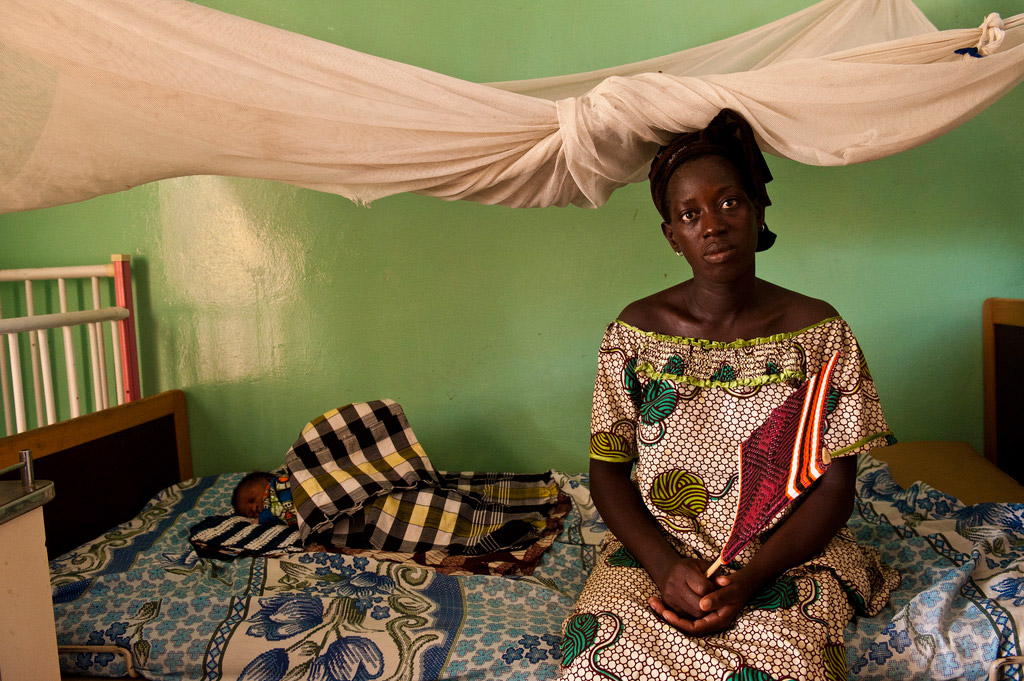
(Mother and child at the maternity ward of Poste de Santé de Bicole, District of Fatick, Senegal. Photo: World Bank/Arne Hoel)
Support Our Journalism
We cannot do without you.. your contribution supports unbiased journalism
IBNS is not driven by any ism- not wokeism, not racism, not skewed secularism, not hyper right-wing or left liberal ideals, nor by any hardline religious beliefs or hyper nationalism. We want to serve you good old objective news, as they are. We do not judge or preach. We let people decide for themselves. We only try to present factual and well-sourced news.
Support objective journalism for a small contribution.



Latest Headlines
Life expectancy is rising again after COVID-19 shock: WHO reveals global health comeback
Sat, Oct 03 2026
From physiotherapy to AI, robotics: MRCCon 2026 highlights how medical rehabilitation has transformed in 27 years
Fri, Oct 02 2026
Study finds chewing tobacco linked to 2.5 lakh deaths worldwide; India among worst-affected countries
Fri, Oct 02 2026
Kolkata's Desun Hospital's Cardio Care Walkathon daws 200 participants on World Heart Day
Fri, Oct 02 2026
Insomnia is more than just sleepless nights: Study finds higher stroke, dementia risk
Tue, Sep 29 2026
Manipal Hospital Dhakuria hosts ‘Heart of Innovation Cardiac Summit’ ahead of World Heart Day
Mon, Sep 28 2026
Eating with your partner could lower blood sugar spikes, study finds
Sun, Sep 27 2026