


 Gold Mining Industry
UN environment agency tackles mercury-tarnished gold mining industry
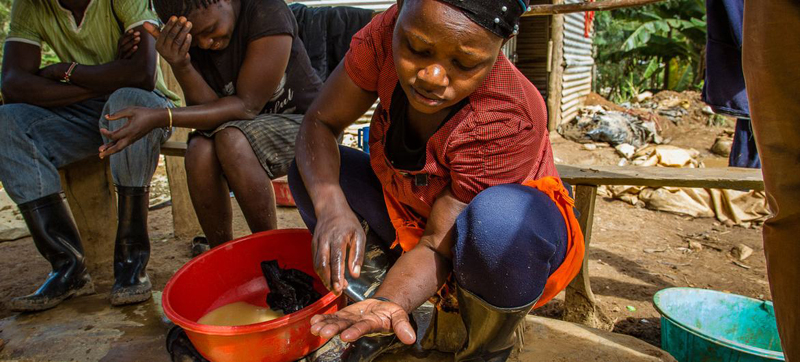
New York: Reducing mercury use by nearly 370 tons in nine countries, a UN environment agency initiative now plans to scale up efforts in 15 other affected nations, making conditions safer for millions of small-scale miners.
“Over 100 million people rely on artisanal gold mining for their livelihoods, so it’s critical that we work with governments to equip miners with the knowledge and tools necessary to phase out mercury use,” said Ludovic Bernaudat, the programme manager of planetGOLD, an innovative effort led by the UN Environment Programme (UNEP).
Tweet URL
Funded by the UN-backed Global Environment Facility, the initiative’s goal is to slash mercury use by 512 tons. Launched in 2019, it also aims at improving more than 1.2 million hectares of land, mitigating some 400,000 tons of carbon dioxide equivalent emissions, and benefiting 370,000 people over the next six years, UNEP said.
Tackling 3,000-year-old practice
About 20 million miners in more than 80 countries work in artisanal and small-scale gold mining, including more than four million women and children.
Often unsafe and unregulated, these operations account for 20 per cent of the global gold supply, generating about $30 billion annually.
Responsible for 37 per cent of global mercury pollution, they emit 2,000 tons of the element every year.
Used in mining for over 3,000 years, mercury does not degrade in the environment. It can accumulate in the atmosphere and pass through the food chain, which can cause irreversible brain damage and disrupt ecosystem health.
‘Mercury should be banned’
For many miners, gold digging is not a choice.
“Gold mining is a big part of our life,” said Demver Suzara, president of a mining association in the Philippines. “We don’t like using mercury, but we have no choice. It’s dangerous; mercury should be banned.”
While many governments are taking action to implement safer standards under the Minamata Convention, which aims as phasing out the use of mercury, enforcement is not always consistent.
In Kenya, where many of more than 250,000 small-scale gold miners are young adults that lack other job opportunities, barriers remain to access necessary equipment.
“I thought it would be simple, but I got it wrong,” says Emmanuel Nyaga, a 21-year-old small-scale miner in Kisumu. “The work is too hard. It would not be my job of choice, but I’ve been here one year.”
Support Our Journalism
We cannot do without you.. your contribution supports unbiased journalism
IBNS is not driven by any ism- not wokeism, not racism, not skewed secularism, not hyper right-wing or left liberal ideals, nor by any hardline religious beliefs or hyper nationalism. We want to serve you good old objective news, as they are. We do not judge or preach. We let people decide for themselves. We only try to present factual and well-sourced news.
Support objective journalism for a small contribution.


