


 Tripura
Tribal women farmers in Tripura village embrace organic farming, transforming livelihoods and nourishing community
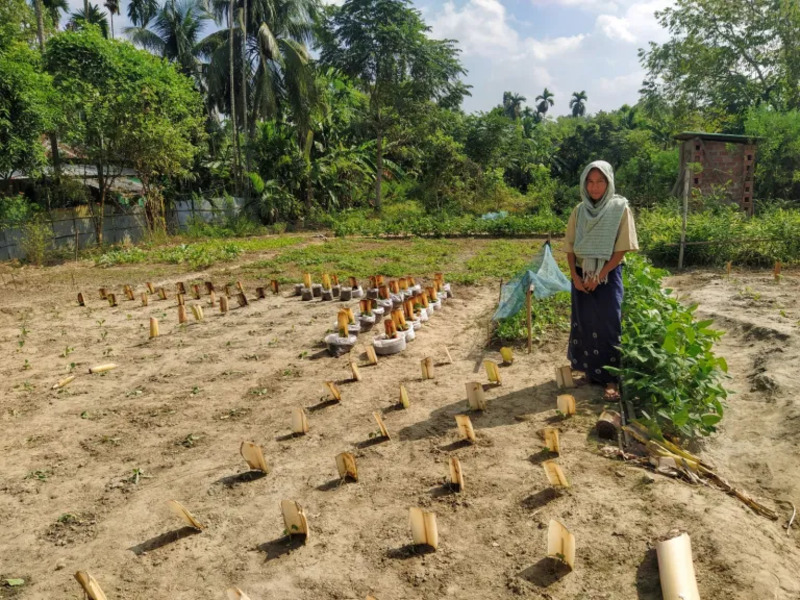
In the village of Bairagipara, West Tripura district, the Sumili river acts as a barrier during monsoons, isolating the 50 agriculture families living there. Hanna Debbarma, a determined tribal farmer, calls for a bridge to connect their village with the rest of the world.
However, despite this challenge, the village thrives in vegetable trading, while Hanna leads the charge towards organic farming, reported EastMojo.
Traditionally reliant on paddy cultivation and wild vegetables, the introduction of SeSTA's organic nutrition garden model revolutionized farming practices.
Hanna Debbarma became the village's pioneering farmer, embracing organic methods and utilizing local resources to grow a diverse range of healthy vegetables. Her success is evident as she now earns Rs 9,000 per month from vegetable sales.
Hanna envisions transforming the entire village into an organic haven. As a Community Resource Person, she tirelessly trains women farmers on organic nutrition gardens, resulting in 23 families adopting this sustainable approach.
The shift to organic farming has also reduced the use of inorganic inputs in paddy cultivation.
Buoyed by their progress, the women farmers trade organic vegetables in various markets, gaining popularity and demand. Inspired by Hanna's achievements, farmers from neighboring villages visit her to learn organic farming techniques.
Hanna dreams of making her village an organic hub, with plans to establish a kindergarten that educates children about healthy food and diet.
With the aim of maximizing profits, Hanna and her group plan to aggregate their organic produce and sell them in Agartala, the capital city. Their success highlights the potential of the village and its ability to overcome challenges, such as the lack of a bridge over the Sumili river.
As these resilient women farmers continue to embrace sustainability, their organic produce will transcend boundaries, reaching markets far beyond their village's periphery.
Support Our Journalism
We cannot do without you.. your contribution supports unbiased journalism
IBNS is not driven by any ism- not wokeism, not racism, not skewed secularism, not hyper right-wing or left liberal ideals, nor by any hardline religious beliefs or hyper nationalism. We want to serve you good old objective news, as they are. We do not judge or preach. We let people decide for themselves. We only try to present factual and well-sourced news.
Support objective journalism for a small contribution.


