


Researchers identify possible pathway to reboot immune system after bone-marrow transplants
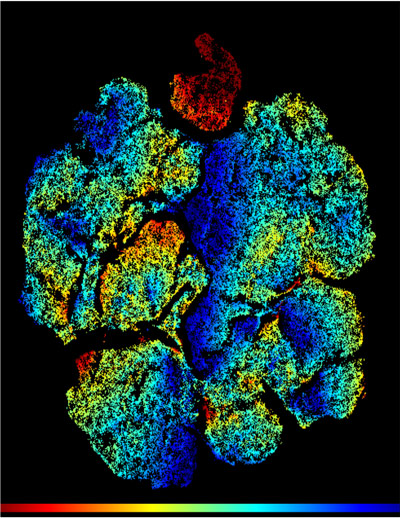
The study, published in the Journal of Immunology, used mouse models to reveal an in vivo mechanism that researchers believe might also represent a novel pathway for immunotherapeutic targeting to support patients following transplantation.
The thymus, which sits in front of the heart and behind the sternum, imports T-cell precursors from the bone marrow and supports their development into mature T-cells that fight off dangerous diseases.
T-cells are often the last cells to recover in cancer patients receiving bone marrow transplants. Though the cancer is cured, patients are often left with an impaired immune system that can take years to recover.
The Birmingham team, supported by US-based collaborators at The Sanford Burnham Medical Research Institute and The Trudeau Institute, found that Lymphotoxin β receptor was required to allow the entry of T-cell progenitors to the thymus both in a healthy state, and during immune recovery following bone-marrow transplantation.
Significantly, the team also found that antibody-mediated stimulation of Lymphotoxin β receptor in murine models enhanced initial thymus recovery and boosted the number of transplant derived T-cells.
Professor Graham Anderson, from the University of Birmingham, explained, “The thymus is often something of an ignored organ, but it plays a crucial role in maintain an effective immune system.”
“Post-transplantation, T-cell progenitors derived from the bone marrow transplant can struggle to enter the thymus, as if the doorway to the thymus is closed. Identifying molecular regulators that can ‘prop open’ the door and allow these cells to enter and mature, could well be a means to help reboot the immune system.”
Beth Lucas, also at the University of Birmingham, added, “This is just one piece of the puzzle. It may be that there are adverse effects to opening the door to the thymus, but identifying a pathway that regulates this process is a significant step.”
Following these positive findings the team aim to move towards in-vitro samples of human thymus to examine the role that Lymphotoxin b receptor might play in regulation of thymus function in man.
The research was funded by the Medical Research Council (MRC) and Cancer Research UK (CRUK), together with support from the Biotechnology and Biological Sciences Research Council (BBSRC) and Arthritis Research UK (ARUK).
Support Our Journalism
We cannot do without you.. your contribution supports unbiased journalism
IBNS is not driven by any ism- not wokeism, not racism, not skewed secularism, not hyper right-wing or left liberal ideals, nor by any hardline religious beliefs or hyper nationalism. We want to serve you good old objective news, as they are. We do not judge or preach. We let people decide for themselves. We only try to present factual and well-sourced news.
Support objective journalism for a small contribution.


