


 Climate Change
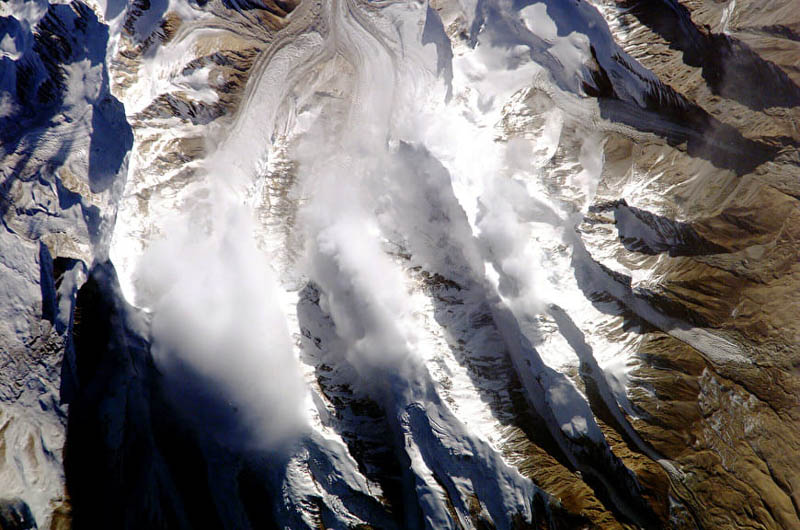
New study finds Hindu Kush Himalayan glaciers disappearing faster
Kathmandu/UNI: The glaciers in the Hindu Kush Himalaya disappeared 65 percent faster in 2011-2020 than in the previous decade, and the changes driven by global warming to the region's glaciers, snow and permafrost are "unprecedented and largely irreversible," said a study released on Tuesday by a leading mountain institute.
The report "Water, Ice, Society, and Ecosystems in the Hindu Kush Himalaya" was published by the International Centre for Integrated Mountain Development (ICIMOD), an eight-nation body based in Kathmandu, Nepal.
According to the study, glaciers in the Hindu Kush Himalaya could lose up to 80 percent of their current volume by the end of the century on current emissions trajectories, while snow cover is projected to fall by up to a quarter, thus drastically reducing freshwater for major rivers.
As a result, the availability of water in the region is expected to peak in mid-century.
The extent of permafrost is decreasing, which will lead to more landslides and problems for infrastructure at high elevation, the study revealed.
"The glaciers of the Hindu Kush Himalaya are a major component of the Earth system," Izabella Koziell, ICIMOD's deputy director general, was quoted as saying in a press release.
"With two billion people in Asia reliant on the water that glaciers and snow here hold, the consequences of losing this cryosphere are too vast to contemplate. We need leaders to act now to prevent catastrophe," Koziell said.
"There is still time to save this critical region, but only if fast and deep emissions cuts start now," she added.
Support Our Journalism
We cannot do without you.. your contribution supports unbiased journalism
IBNS is not driven by any ism- not wokeism, not racism, not skewed secularism, not hyper right-wing or left liberal ideals, nor by any hardline religious beliefs or hyper nationalism. We want to serve you good old objective news, as they are. We do not judge or preach. We let people decide for themselves. We only try to present factual and well-sourced news.
Support objective journalism for a small contribution.


