


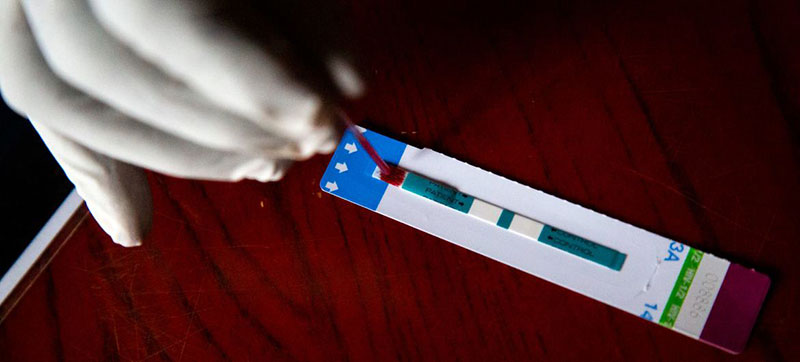
 HIV Variant
Fast-spreading HIV variant doubles rate of immune system decline
New Delhi: Newly published research from the Netherlands has revealed the existence of a more transmissible and damaging variant of HIV, the Joint United Nations Programme on HIV/AIDS (UNAIDS) said on Monday.
People living with the newly revealed subtype, experience double the rate of immune system decline (measured by the CD4 count level of infection-busting T cells) and have higher viral loads.
They are also vulnerable to developing AIDS two to three times faster after diagnosis, than if they were living with other strains of the virus.
The research also revealed that the variant has been circulating in the Netherlands for years and remains receptive to treatment.
The study, led by researchers from the University of Oxford’s Big Data Institute, is the first to report on the subtype-B of the virus.
Treatment still works
According to UNAIDS in press statement, the discovery highlights the urgency to “halt the pandemic and reach all and reach all with testing and treatment”
The long-running HIV pandemic continues to take a life every minute and scientists have long worried about the evolution of new, more transmissible, variants of the virus.
According to UNAIDS, the newly identified variant does not represent a major public health threat but underscores the urgency of speeding up the UN’s drive to end AIDS.
In a statement, the Programme Deputy Executive Director, Eamonn Murphy, noted that around 10 million people living with HIV are still not on antiretroviral therapy, “fuelling the continued spread of the virus and potential for further variants.”
“We urgently need to deploy cutting-edge medical innovations in ways that reach the communities most in need. Whether it’s HIV treatment or COVID-19 vaccines, inequalities in access are perpetuating pandemics in ways that harm us all”, he said.
79 million infections
HIV remains the deadliest pandemic of our time, said UNAIDS.
Since first discovered in the early 80s, an estimated 79 million people have become infected with the virus, for which there is still no vaccine and no cure.
Some 36 million people have died from AIDS-related illnesses since the start of the pandemic and 1.5 million people were newly infected in 2020.
Of the 38 million people living with the virus today, 28 million are on life-saving antiretroviral therapy, keeping them alive and well and preventing transmission.
Support Our Journalism
We cannot do without you.. your contribution supports unbiased journalism
IBNS is not driven by any ism- not wokeism, not racism, not skewed secularism, not hyper right-wing or left liberal ideals, nor by any hardline religious beliefs or hyper nationalism. We want to serve you good old objective news, as they are. We do not judge or preach. We let people decide for themselves. We only try to present factual and well-sourced news.
Support objective journalism for a small contribution.


