


 Vaccine
COVID-19: First mRNA vaccine tech transfer hub a 'great step forward'
New York: The World Health Organization (WHO) is supporting a South African consortium in establishing the first COVID-19 mRNA vaccine technology transfer hub, the UN agency announced on Monday.
The facility will allow manufacturers from developing countries to receive training in how to produce vaccines, and the relevant licenses to do so, as part of global efforts to scale-up access to lifesaving treatments.
The development follows WHO’s call in April for public and private companies to express their interest in creating technology transfer hubs so that low and middle-income countries could meet their urgent need for vaccines, amid critical shortages.
‘A key moment’
“Today’s announcement is a great step forward for South Africa, and for the world. I hope this will be a key moment for increasing production capacity in Africa for COVID-19 vaccines, but also for future vaccines”, said WHO chief Tedros Adhamon Ghebreyesus, speaking during his bi-weekly media briefing from Geneva.
Messenger RNA, or mRNA technology, instructs cells to make a protein that generates an immune response in the body, thus producing the antibodies that provide protection against a disease.
It is the basis for the Pfizer/BioNTech and Moderna COVID-19 vaccines being used by governments worldwide, and in the UN-supported COVAX global vaccine solidarity initiative.
"It’s potentially easier to scale than other vaccine technologies and could be faster and easier to adapt to variants of concern", Tedros said.
The South African consortium involves a biotech company called Afrigen Biologics and Vaccines, which will act as the hub by manufacturing mRNA vaccines and providing training to another manufacturer called Biovac.
WHO’s role includes establishing the criteria for the technology transfer, assessing applications and developing standards, while the Africa Centres for Disease Control and Prevention, will provide guidance through the Partnership for African Vaccines Manufacturing.
Changing the narrative
South African President Cyril Ramaphosa underlined the importance of the hub for the continent.
“The ability to manufacture vaccines, medicines and other health-related commodities will help put Africa on a path to self-determination”, he said, speaking via video link.
“Through this initiative and others, we will change the narrative of an Africa that is a centre of disease and poor development. We will create a narrative that celebrates our successes in reducing the burden of disease, in advancing self-reliance, and also advancing sustainable development.”
Highs and lows
The announcement of the hub, with others in the pipeline, comes as COVID-19 cases worldwide decline for an eighth week in a row, and as deaths have dropped over the past seven weeks, consecutively.
While welcoming the good news, Tedros said new infections and deaths remain high globally, with more than 2.5 million cases and 64,000 deaths reported last week.
The rate of decline has slowed in most regions, and every region has countries that are witnessing a rapid increase in caseloads and deaths. In Africa, cases and deaths increased by almost 40 per cent in the past week, while some countries have seen their numbers tripled or quadrupled.
“While a handful of countries have high vaccination rates and are now seeing lower numbers of hospitalisations and deaths, other countries in Africa, the Americas and Asia are now facing steep epidemics”, Tedros said, adding that these cases and deaths are largely avoidable.
Several factors are driving increases, including increased spread of virus variants of concern, more socializing, ineffective use of public health and social measures, and vaccine inequity.
“The inequitable access to vaccines has demonstrated that in a crisis, low-income countries cannot rely on vaccine-producing countries to supply their needs”, he said.
WHO continues to push for greater sharing of knowledge, technology and licenses to boost vaccine manufacturing, and for the waiver of related intellectual property rights.
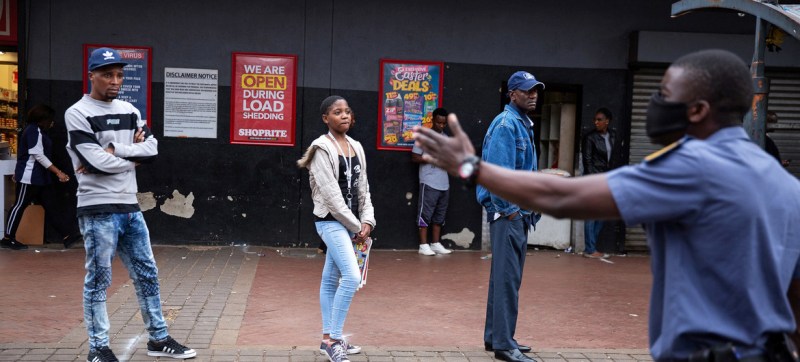
Image:IMF Photo/James Oatway
Support Our Journalism
We cannot do without you.. your contribution supports unbiased journalism
IBNS is not driven by any ism- not wokeism, not racism, not skewed secularism, not hyper right-wing or left liberal ideals, nor by any hardline religious beliefs or hyper nationalism. We want to serve you good old objective news, as they are. We do not judge or preach. We let people decide for themselves. We only try to present factual and well-sourced news.
Support objective journalism for a small contribution.


