


Conflicts and extreme climate change threatens access to food in 39 countries – UN agriculture report
New York, Sept 21 (IBNS): Unrelenting conflict and rapid climate change is continuing to reshape agriculture across the world, and contributing to major food shortages across 39 countries, which continue to rely on help from the United Nations to meet their food needs, the Food and Agriculture Organization (FAO) said on Thursday.
FAO’s Crop Prospects and Food Situation report, spelled out that 31 countries in Africa, seven in Asia, and Haiti in the Caribbean, remain in need of external food assistance.
According to the report, civil conflicts and population displacement are the key drivers of food insecurity in East Africa and the Near East, whereas dry-weather conditions have led to reduced cereal outputs in Southern Africa.
Civil conflicts, often coupled with extreme climate events, continue to hamper food access to vulnerable populations in Central African Republic, Nigeria, South Sudan, Syria, Yemen, among others.
Ongoing conflict has left 17.8 million Yemenis in need of humanitarian assistance, and around two million in the Central African Republic, which is also fueled by reduced food production and poorly functioning markets.
Cereals remain key
The global importance of cereal crops to the human diet “cannot be over stated,” according to FAO. Cereals are hugely adaptable, especially in regions that rely mainly on plant sources for protein and calories.
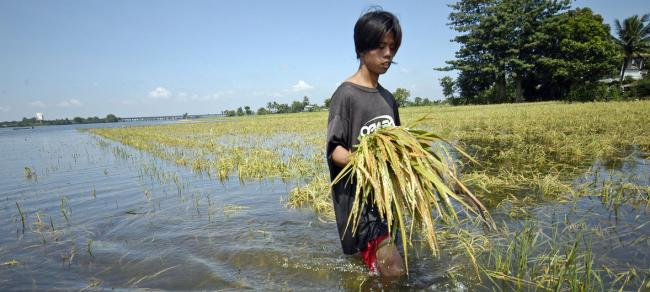
Against this backdrop, unfavourable weather conditions curbed Southern African cereal outputs so far this year, heightening food insecurity, while abundant rains in East Africa boosted production but resulted in localized flooding.
In the continent’s North, favourable spring weather prompted a production upturn, while in the West, harvests are expected to revert back to average levels.
In the Near East and Central Asia’s Commonwealth of Independent States, rainfall deficits have prompted predictions that 2018 cereal harvests will be “below-average levels,” while ongoing conflicts in parts of the Near East continue to impede agricultural activities.
The Far East is forecast to rise slightly, driven by a larger paddy output.
At the same time, weather conditions have impacted cereal production in the Latin America and the Caribbean area.
“Dry weather in South America has lowered 2018 cereal outputs relative to last year’s record,” the report stated, noting maize in particular. In Central America and the Caribbean, it says: “unfavourable rains affected 2018 maize production, except in Mexico.”
The report notes that cereal production in the 52 Low-Income Food-Deficit Countries (LIFDCs) is projected at around 490 million metric tonnes; about 19 million above the past five-year average.
The full list of the 39 countries currently in need
Afghanistan, Burkina Faso, Burundi, Cabo Verde, Cameroon, Central African Republic, Chad, Congo, Democratic People's Republic of Korea, Democratic Republic of the Congo, Djibouti, Eritrea, Eswatini (former Swaziland), Ethiopia, Guinea, Haiti, Iraq, Kenya, Lesotho, Liberia, Libya, Madagascar, Malawi, Mali, Mauritania, Mozambique, Myanmar, Niger, Nigeria, Pakistan, Senegal, Sierra Leone, Somalia, South Sudan, Sudan, Syria, Uganda, Yemen and Zimbabwe.
Nonie Reyes / World Bank
Support Our Journalism
We cannot do without you.. your contribution supports unbiased journalism
IBNS is not driven by any ism- not wokeism, not racism, not skewed secularism, not hyper right-wing or left liberal ideals, nor by any hardline religious beliefs or hyper nationalism. We want to serve you good old objective news, as they are. We do not judge or preach. We let people decide for themselves. We only try to present factual and well-sourced news.
Support objective journalism for a small contribution.


