


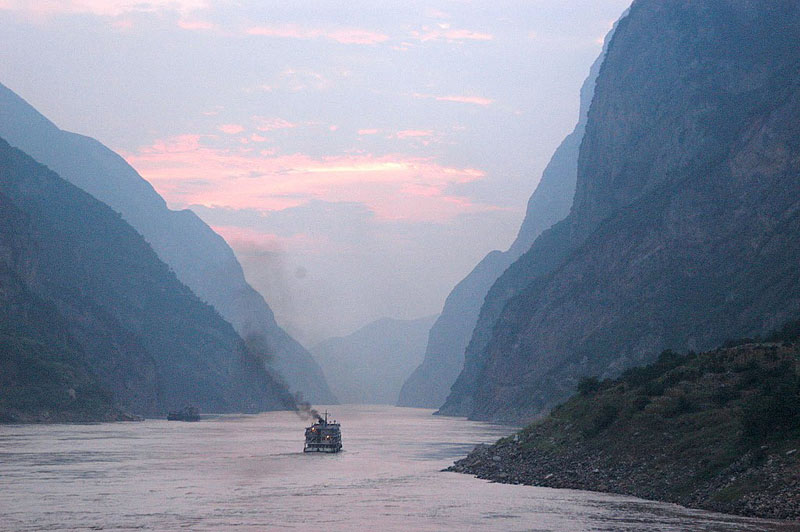
 China River
China's biggest river is slowly drying up, warns experts
Beijing: After Covid19, China might soon be facing another challenge as the biggest river of the country is slowly drying up, media reports said.
After examining decades of records from ground stations and satellite images, government researchers estimate that the average level of the Yangtze River has fallen by about 2cm (0.8 inches) every five years since the 1980s, reports The South China Morning Post.
Researchers warn that the overall decline of the waterway could have a great impact on the environment and economy of one of the richest, fastest-growing parts of the country, the newspaper reported.
It is the longest river in Asia, the third-longest in the world and the longest in the world to flow entirely within one country.
It rises at Jari Hill in the Tanggula Mountains (Tibetan Plateau) and flows 6,300 km (3,900 mi) in a generally easterly direction to the East China Sea. It is the sixth-largest river by discharge volume in the world.
Support Our Journalism
We cannot do without you.. your contribution supports unbiased journalism
IBNS is not driven by any ism- not wokeism, not racism, not skewed secularism, not hyper right-wing or left liberal ideals, nor by any hardline religious beliefs or hyper nationalism. We want to serve you good old objective news, as they are. We do not judge or preach. We let people decide for themselves. We only try to present factual and well-sourced news.
Support objective journalism for a small contribution.


