


 Air Pollution
Car passengers can reduce pollution risk by closing windows and changing route, says study
Birmingham/IBNS: Drivers and passengers can inhale significantly lower levels of air pollution by setting their vehicle’s ventilation systems more effectively and taking a ‘cleaner’ route to their destination, a new study reveals.
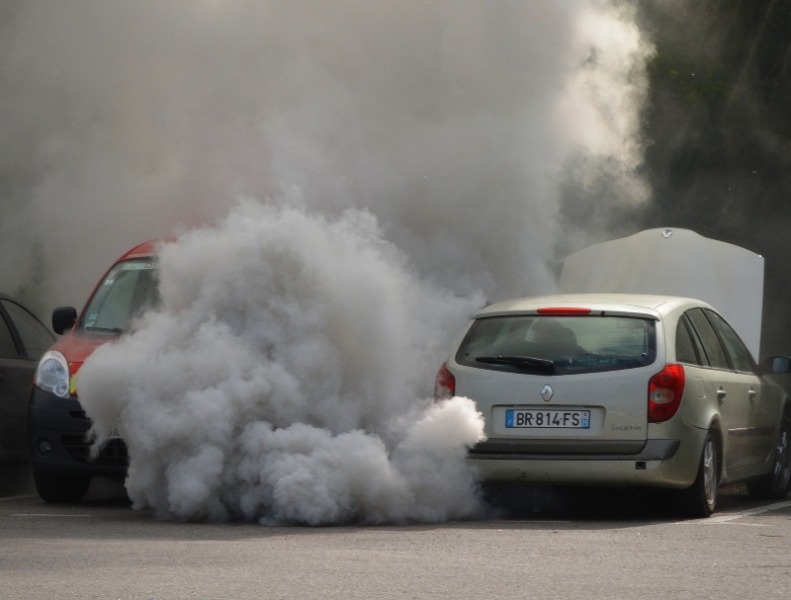
Road transport emissions are major source of urban air pollution - nitrogen oxides (NOx) and particulate matter (PM) coming from vehicle exhausts, plus non-exhaust emissions such as brake dust, tyre wear and road dust in the case of PM.
Outdoor air pollution is estimated to contribute to 40,000 deaths in Britain annually and an estimated 7 million deaths globally - linked to diseases ranging from lung cancer to stroke and respiratory infection.
Scientists at the University of Birmingham have found that – if vehicle ventilation is set correctly – drivers and passengers are exposed to up to 49 % less PM2.5 and 34 % less Nitrogen Dioxide (NO2) than the on-road levels. They have published their findings in the journal Atmospheric Environment.
Lead author Dr. Vasileios Matthaios, from the University of Birmingham, commented: “Exposure to air pollution within the vehicle depends upon both the ventilation setting and the type of route. The lowest exposure to particles and gases is when the windows are closed with recirculation and air conditioning switched on.
“Drivers and passengers inhale more air pollution when traveling on urban roads, followed by ring-roads and sub-urban roads. However, because concentrations inside a vehicle are lower and occupants are not as active, they inhale less air pollution than people cycling or walking on the same routes.”
Researchers explored within-vehicle levels of NO2 and PM2.5 under different vehicle ventilation settings and driving routes during real-world driving experiments around the city of Birmingham.
Four vehicles were driven on a consistent route of three contrasting road types, measuring simultaneous within-vehicle and ambient levels of particulate matter (PM10, PM2.5, PM1), ultrafine particles number (UFP), lung surface deposited area (LSDA), nitric oxide (NO) and nitrogen dioxide (NO2).
“Our findings show that vehicle passengers can modify their exposure and inhalation dose through ventilation setting and route choice - this may have significant health impacts upon the most exposed groups such as professional drivers,” Dr. Vasileios Matthaios added.
Increasing urbanisation together with growth in vehicle ownership and passenger-journeys have contributed to growth in traffic-related ambient air pollution.
Researchers noted that related health issues depend on an individual’s exposure to air pollution and the vulnerability of the individual to a given dose. This, in turn, depends on route selection, time of day, transport type, respiration rate and, in the case of vehicles, ventilation options and efficacy and type of cabin filters.
As part of the MMAP-VEX project ‘Measuring and Modelling Air Pollution Within Vehicles – Implications for daily EXposure and Human Health’, University of Birmingham researchers will further investigate other aspects that affect within vehicle air pollution under real world driving conditions, including:
- Testing different types of cabin filters such as activated carbon and standard pollen cabin filters, to find their infiltration efficacy
- Influence of indoor air purifiers to within-vehicle exposure reduction; and
- Passenger exposure variation at different driving locations, for example waiting at traffic lights, roundabouts and in tunnels.
(Image Credit: Pixabay)
Support Our Journalism
We cannot do without you.. your contribution supports unbiased journalism
IBNS is not driven by any ism- not wokeism, not racism, not skewed secularism, not hyper right-wing or left liberal ideals, nor by any hardline religious beliefs or hyper nationalism. We want to serve you good old objective news, as they are. We do not judge or preach. We let people decide for themselves. We only try to present factual and well-sourced news.
Support objective journalism for a small contribution.


