


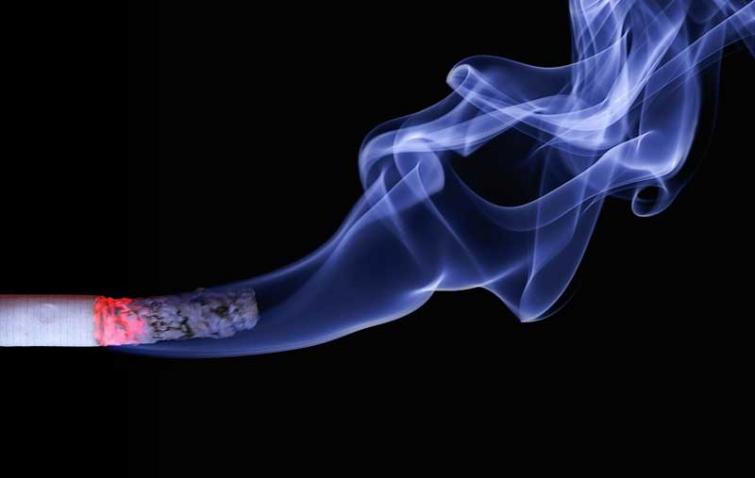
Avoid smoky environments to protect your heart:Study
Milan, May 4 (IBNS): If a room or car is smoky, stay away until it has cleared. That’s the main message of research presented today at EuroHeartCare 2019, a scientific congress of the European Society of Cardiology (ESC).
“Avoid exposure to secondhand smoke regardless of whether the smoker is still in the room,” said study author Professor Byung Jin Kim, of Sungkyunkwan University, Seoul, Republic of Korea. “Our study in non-smokers shows that the risk of high blood pressure (hypertension) is higher with longer duration of passive smoking – but even the lowest amounts are dangerous.”
Passive smoking at home or work was linked with a 13% increased risk of hypertension. Living with a smoker after age 20 was associated with a 15% greater risk. Exposure to passive smoking for ten years or more was related to a 17% increased risk of hypertension. Men and women were equally affected.
Participants with hypertension were significantly more likely to be exposed to secondhand smoke at home or work (27.9%) than those with normal blood pressure (22.6%). Hypertension was significantly more common in people exposed to passive smoke at home or work (7.2%) compared to no exposure (5.5%).
High blood pressure is the leading global cause of premature death, accounting for almost ten million deaths in 2015, and those affected are advised to quit smoking.2 Previous research has suggested a link between passive smoking and hypertension in non-smokers. But most studies were small, restricted to women, and used self-reported questionnaires in which respondents typically over-report never-smoking.
This is the first large study to assess the association between secondhand smoke and hypertension in never-smokers verified by urinary levels of cotinine, the principal metabolite of nicotine. It included 131,739 never-smokers, one-third men, and an average age of 35 years.
“The results suggest that it is necessary to keep completely away from secondhand smoke, not just reduce exposure, to protect against hypertension,” said Professor Kim.
“While efforts have been made around the world to minimise the dangers of passive smoking by expanding no smoking areas in public places, our study shows that more than one in five never-smokers are still exposed to secondhand smoke. Stricter smoking bans are needed, together with more help for smokers to kick the habit. Knowing that family members suffer should be extra motivation for smokers to quit,” he said.
Support Our Journalism
We cannot do without you.. your contribution supports unbiased journalism
IBNS is not driven by any ism- not wokeism, not racism, not skewed secularism, not hyper right-wing or left liberal ideals, nor by any hardline religious beliefs or hyper nationalism. We want to serve you good old objective news, as they are. We do not judge or preach. We let people decide for themselves. We only try to present factual and well-sourced news.
Support objective journalism for a small contribution.


