


‘Essential step’ towards universal health care made at pivotal UN conference
New York, Oct 26 (IBNS): United Nations Member States have unanimously vowed to strengthen primary health care, as an “essential step” towards achieving universal health coverage for all.
The commitment came at the Global Conference on Primary Health Care, being held in the capital of Kazakhstan this week. Known as the Declaration of Astana, it reaffirms the historic 1978 Declaration of Alma-Ata, which was the first accord reached by world leaders on primary health care.
Thursday’s declaration is also intended to help the world achieve Sustainable Development Goal 3: “ Ensure healthy lives and promote well-being for all at all ages.”
The new Declaration has been made as a global movement grows for greater investment in primary health care to achieve universal health coverage: so far, health resources have been overwhelmingly focused on single disease interventions rather than strong, comprehensive health systems – a gap highlighted by several health emergencies in recent years.The 1978 declaration laid the foundation for universal primary health care, but progress over the past four decades has been uneven: today, half the world’s population lacks access to essential health services – including care for non-communicable and communicable diseases, maternal and child health, mental health, and sexual and reproductive health.
“Today, instead of health for all, we have health for some,” said Dr. Tedros Adhanom Ghebreyesus, Director-General of the World Health Organization (WHO). “We all have a solemn responsibility to ensure that today’s declaration on primary health care enables every person, everywhere to exercise their fundamental right to health.”
The signatories to the Declaration made pledges in four key areas: for bold political choices for health to be made across all sectors; to build sustainable primary health care; to empower individuals and communities; and to align stakeholder support to national policies, strategies and plans.
The World Health Organization (WHO), UN Childrens’ Fund (UNICEF) and the Government of Kazahstan are co-hosting the Global Conference on Primary Health Care, described as “pivotal” by the WHO, with participants including government ministers from around the world, health workers, activists and leaders from civil society and the private sector.
In a joint statement, UNICEF and WHO promised to help governments and civil society to act on the Declaration of Astana and support the implementation of the pledges made in the Declaration.
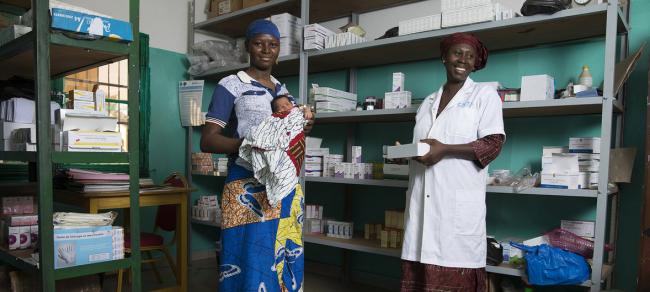
UNICEF/UN0188875/Njiokiktjien
Support Our Journalism
We cannot do without you.. your contribution supports unbiased journalism
IBNS is not driven by any ism- not wokeism, not racism, not skewed secularism, not hyper right-wing or left liberal ideals, nor by any hardline religious beliefs or hyper nationalism. We want to serve you good old objective news, as they are. We do not judge or preach. We let people decide for themselves. We only try to present factual and well-sourced news.
Support objective journalism for a small contribution.


