World economy is now in recession, worse than 2008 crisis: IMF
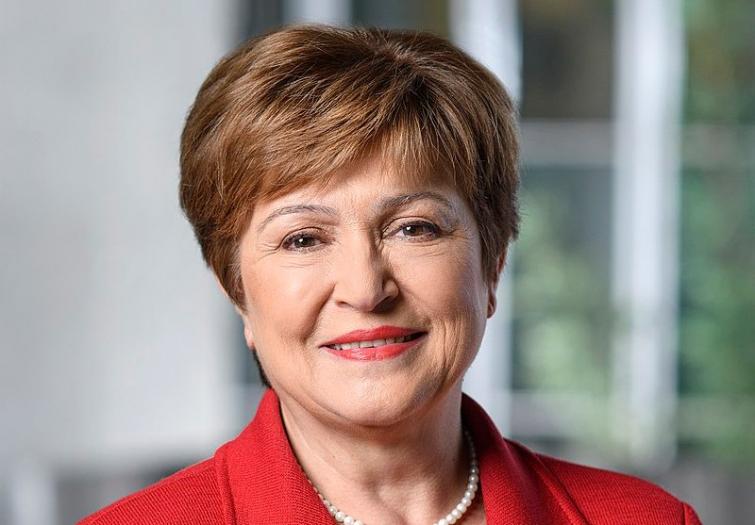
Washington/IBNS: International Monetary Fund (IMF) Managing Director Kristalina Georgieva on Friday warned that the world economy is currently in 'recession' and it is worse than the 2008 scenario.
During a joint press conference with the World Health Organization (WHO), she said: "World economy is now in a recession way worse than the global financial crisis of 2008 due to COVID."
"It is a crisis like no other and never in the history of IMF we have seen the world economy coming to a standstill," she said.
.@KGeorgieva: Emerging market and developing economies are particularly vulnerable during this #COVID19 pandemic. Their health systems are already fragile and now they have been hit terribly hard economically. IMF is giving those countries high priority. https://t.co/BJuQi6nNiA pic.twitter.com/q2e7Y5xHK3
— IMFLive (@IMFLive) April 3, 2020
She said the global nature of the COVID-19 outbreak has made all institutions to work together.
"The global nature of the pandemic reinforces the importance of us all working together—people, countries and global institutions," she said.
"As the world responds to COVID-19, it might sometimes seem like there is a trade-off to be made: either save lives or save livelihoods. In fact, this is a false dilemma—getting the virus under control and saving lives is, if anything, a necessity to saving livelihoods," she said.
She said emerging market and developing economies are particularly vulnerable in the current situation.
"Their health systems are already fragile and now they have been hit terribly hard economically. The IMF is giving those countries high priority," the IMF chief said.
She highlighted: "The demand for our financing has skyrocketed. In fact, never in the 75 years history of our institution have so many countries found themselves in need of emergency financing – 85 countries have approached us so far, all at one time."
"To accommodate this surge, we are deploying our total financial capacity of $1 trillion," she said.
Kristalina Georgieva said her institution is trying hard and looking to different ways to provide additional liquidity.
" Within that, we are aiming to double the availability of our emergency, fast-disbursing resources from $50 billion up to $100 billion – funds that can help the emerging market and developing countries in particular," she said.
Support Our Journalism
We cannot do without you.. your contribution supports unbiased journalism
IBNS is not driven by any ism- not wokeism, not racism, not skewed secularism, not hyper right-wing or left liberal ideals, nor by any hardline religious beliefs or hyper nationalism. We want to serve you good old objective news, as they are. We do not judge or preach. We let people decide for themselves. We only try to present factual and well-sourced news.
Support objective journalism for a small contribution.