 Trade Deal
White House clarifies India–US trade deal after Trump’s ‘zero tariff’ claim sparks buzz
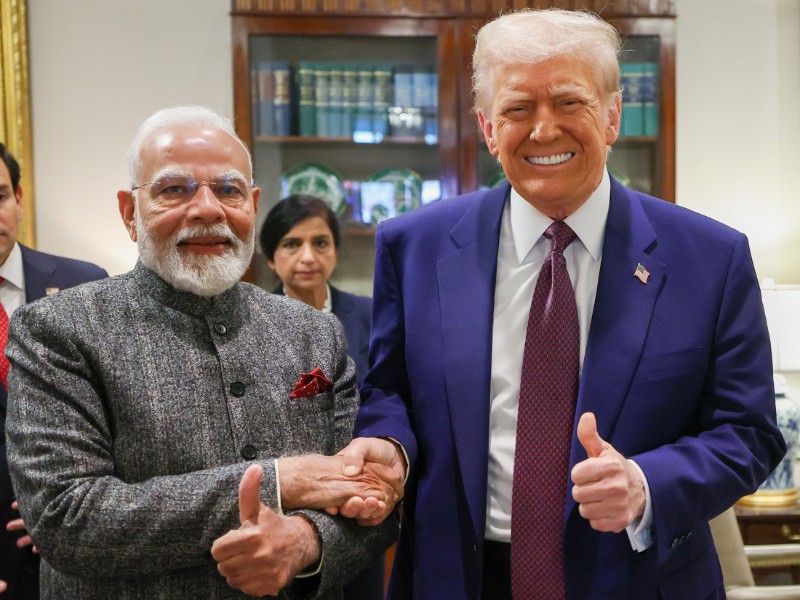
Washington/IBNS: The White House has released an official factsheet detailing what it calls a “historic” India–US trade agreement, days after President Donald Trump’s remark about “zero tariffs” stirred debate and uncertainty among traders and industry stakeholders.
The proposed deal aims to expand market access, lower trade barriers and deepen economic cooperation between the world’s largest democracy and its biggest economy.
According to the White House, the agreement lays out a structured framework for tariff reductions, regulatory cooperation and long-term growth in bilateral trade.
Tariff cuts and market access at core
As outlined in the statement, the United States has agreed to reduce its reciprocal tariff on Indian goods from 25 percent to 18 percent.
In exchange, India will either reduce or completely eliminate tariffs on a wide range of American industrial and agricultural products, significantly opening its vast domestic market to US exporters.
The White House said this move is intended to unlock new opportunities for American businesses while strengthening supply chains between the two countries.
Agriculture, energy and big-ticket purchases
A central element of the framework is India’s commitment to ease tariffs on several US agricultural products, including dried distillers’ grains, sorghum, tree nuts, fruits, selected pulses, soybean oil, as well as wine and spirits.
These sectors have long been a priority for Washington, which has repeatedly flagged India’s high agricultural duties as a major trade irritant.
Beyond tariff reductions, India has also agreed to increase purchases of American goods worth more than $500 billion across sectors such as energy, technology, agriculture and coal.
The White House described this as a major step toward rebalancing trade flows between the two nations.
Digital trade and non-tariff barriers
The agreement also addresses non-tariff barriers that have hindered trade in key sectors.
Both sides will work to resolve regulatory issues and negotiate rules of origin to ensure that the benefits of the deal primarily accrue to Indian and American companies.
Digital trade forms another major pillar of the framework.
According to the White House, India has agreed to remove its digital services taxes and engage in negotiations on new bilateral digital trade rules.
These discussions aim to curb discriminatory practices and prevent the imposition of customs duties on electronic transmissions.
Technology, supply chains and economic security
Technology cooperation and supply chain resilience feature prominently in the proposed deal.
The US and India plan to expand collaboration in advanced technology products while strengthening economic security.
The two sides have also committed to closer coordination on investment screening and export controls, reflecting shared concerns over supply chain vulnerabilities and strategic dependencies.
Trump’s ‘zero tariff’ claim and official clarification
President Donald Trump had claimed that India agreed to reduce tariff and non-tariff barriers to “zero,” a statement that briefly unsettled sections of India’s trading community.
Officials have since clarified that the agreement envisions a phased and negotiated approach rather than the immediate elimination of all duties.
The White House emphasised that the framework is designed to gradually address long-standing trade imbalances and remove barriers faced by American exporters, particularly in sectors such as agriculture and automobiles, where India maintains relatively high tariffs.
What's next
In the weeks ahead, both governments are expected to begin implementing the framework while working toward an interim trade agreement.
Negotiations will continue on unresolved areas, including services, investment norms, technical standards and intellectual property rights.
The goal, according to officials, is to eventually arrive at a comprehensive and mutually beneficial bilateral trade agreement that reflects the growing strategic and economic partnership between India and the United States.
Support Our Journalism
We cannot do without you.. your contribution supports unbiased journalism
IBNS is not driven by any ism- not wokeism, not racism, not skewed secularism, not hyper right-wing or left liberal ideals, nor by any hardline religious beliefs or hyper nationalism. We want to serve you good old objective news, as they are. We do not judge or preach. We let people decide for themselves. We only try to present factual and well-sourced news.
Support objective journalism for a small contribution.