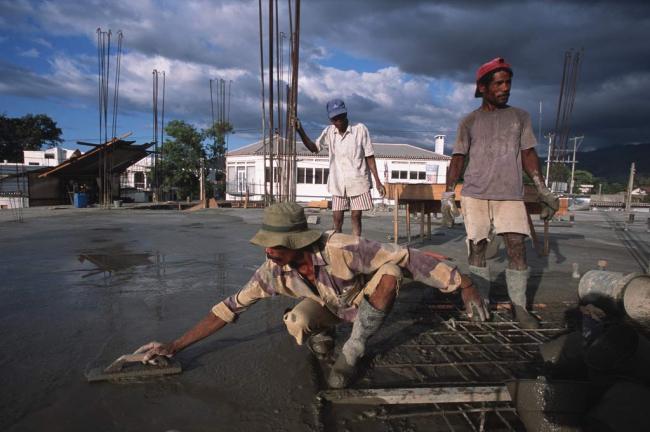
UN study predicts rising global unemployment due to slower growth, inequality, turbulence
According to the World Employment and Social Outlook – Trends 2015 (WESO) report, released on Tuesday by the International Labour Organisation (ILO), the next four years will see the total number of people out of work worldwide climb from the current 201 million to 212 million.
“More than 61 million jobs have been lost since the start of the global crisis in 2008,” said ILO Director-General Guy Ryder. “This means the jobs crisis is far from over so there is no place for complacency.”
Young workers aged 15-24 are particularly hit by the crisis, with a global youth unemployment rate of almost 13 per cent in 2014 and a further increase expected in coming years. By contrast, older workers have fared relatively well since the start of the global financial crisis in 2008.
“The good news is that the number of workers in vulnerable jobs and working poverty has fallen around the globe. However, it is still not acceptable that almost half of the world's workers lack access to basic necessities and decent work,” Ryder said. “The situation is even worse for women.”
Inequality is rising and is predicted to continue doing so, according to the report, with the world's richest 10 per cent earning 30 to 40 per cent of total income and the poorest 10 per cent earn between just two and seven per cent. The situation creates uncertainty for enterprise investment and has slowed the rebound from the financial crisis.
“If low wages lead people to consume less, and investment remains subdued, this obviously has a negative impact on growth. Income inequality in some advanced economies now approach levels observed among emerging economies. By contrast, the emerging economies made some progress in reducing their high levels of inequality,” said the ILO head.
The inequality trends have also undermined trust in Governments, keeping the risk of social unrest high, particularly in countries where unemployment is highest or rising quickest. Social unrest has shot up since the beginning of the financial crisis in 2008, with only developed economies and countries in South-East Asia and the Pacific region seeing a reduction – though even there, levels are significantly above historical averages.
Unemployment growth is fuelled in part by structural factors, like major shifts in demand for skills. Globally, there is a shorter supply of routine middle-skilled jobs, like bookkeepers and clerical workers, while availability of both low-skilled, non-routine jobs, such as security personnel, and high-skilled non-routine cognitive jobs, such as lawyers and software engineers has increased.
“The trends we see are worrying but we can improve the overall economic picture if we tackle underlying weaknesses, in particular the continued lack of aggregate demand, stagnation in the Eurozone, uncertain prospects for productive investment, especially among small enterprises, and mounting inequality,” said Ryder.
Photo: World Bank/Alex Baluyut
Support Our Journalism
We cannot do without you.. your contribution supports unbiased journalism
IBNS is not driven by any ism- not wokeism, not racism, not skewed secularism, not hyper right-wing or left liberal ideals, nor by any hardline religious beliefs or hyper nationalism. We want to serve you good old objective news, as they are. We do not judge or preach. We let people decide for themselves. We only try to present factual and well-sourced news.
Support objective journalism for a small contribution.