

Slowing global wage growth for fourth straight year ‘greatly concerning,’ says UN labour agency
According to the International Labour Organization (ILO) Global Wage Report 2016/17: Wage inequality in the workplace, wage growth fell from 2.5 per cent in 2012 to 1.7 per cent in 2015.
Furthermore, if China, with the fastest wage growth in the world, is not included, the drop would be from 1.6 per cent to 0.9 per cent.
“In an economic context in which lower demand leads to lower prices (or deflation), falling wages could be the source of great concern, as it could add further pressure to deflation,” Deborah Greenfield, the ILO Deputy Director-General for Policy, said in a news release announcing the report.
The release added that in much of the period following the 2008-2009 financial crisis, wage growth was propelled by relatively strong growth in developing countries and regions. However, more recently, this trend has slowed or reversed.
Among emerging and developing G20 countries, real wage growth declined from 6.6 per cent in 2012 to 2.5 per cent in 2015. Among developed G20 countries, it rose from 0.2 per cent in 2012 to 1.7 per cent in 2015, the highest rate in the last decade.
The report also showed vast differences between regions among developing economies. In 2015, growth in South and East Asia, and the Pacific was relatively robust at 4.0 per cent, but this declined to 3.4 per cent in Central and Western Asia, and is estimated at 2.1 per cent in the Arab countries and at 2.0 per cent in Africa. However, real wages fell by 1.3 per cent in Latin America and the Caribbean, and by 5.2 per cent in Eastern Europe.
At the same time, the report also showed stark distribution among wages within countries.
In Europe, for instance, the top 10 per cent of best paid employees took on average 25.5 per cent of the total wages in their respective countries, almost as much as what the lowest paid 50 per cent received (29.1 per cent).
The ILO flagship report further revealed that the wage inequality is even steeper for women:
“While the overall hourly gender pay gap for Europe is about 20 per cent, the gender pay gap in the top one per cent of wage earners reaches about 45 per cent. Among men and women CEOs who are among the best-paid one per cent of wage earners, the gender pay gap is more than 50 per cent,” the release added.
Differences within enterprises
This report was also the first instance that explored wage distribution within enterprises. It found that inequality between enterprises tended to larger in developing than in developed countries.
“On average, in 22 European countries, inequality within enterprises accounts for 42 per cent of total wage inequality, while the rest is due to inequality between enterprises,” said Rosalia Vazquez-Alvarez, ILO economist and one of the authors of the report.
When comparing the wages of individuals to the average wage of the enterprises where they work, the ILO report found that in Europe about 80 per cent workers are paid less than the average in those enterprises.
The report also highlighted policies that can be used to reduce excessive wage inequality.
“Minimum wages and collective bargaining play an important role in this context,” said ILO, noting that other possible measures such as regulation or self-regulation of executive remuneration, promoting the productivity of sustainable enterprises and addressing the factors leading to wage inequality between groups of workers, including women and men.
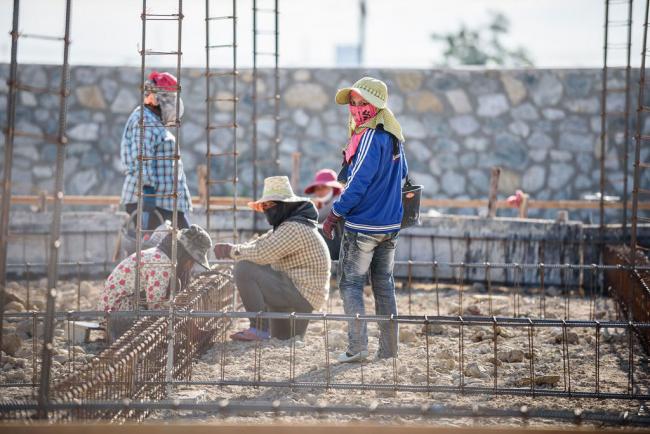
Photo: ILO
Source: www.justearthnews.com
Support Our Journalism
We cannot do without you.. your contribution supports unbiased journalism
IBNS is not driven by any ism- not wokeism, not racism, not skewed secularism, not hyper right-wing or left liberal ideals, nor by any hardline religious beliefs or hyper nationalism. We want to serve you good old objective news, as they are. We do not judge or preach. We let people decide for themselves. We only try to present factual and well-sourced news.
Support objective journalism for a small contribution.