 Punjab
Punjab’s Cultural Renaissance in a Post-Green Revolution World
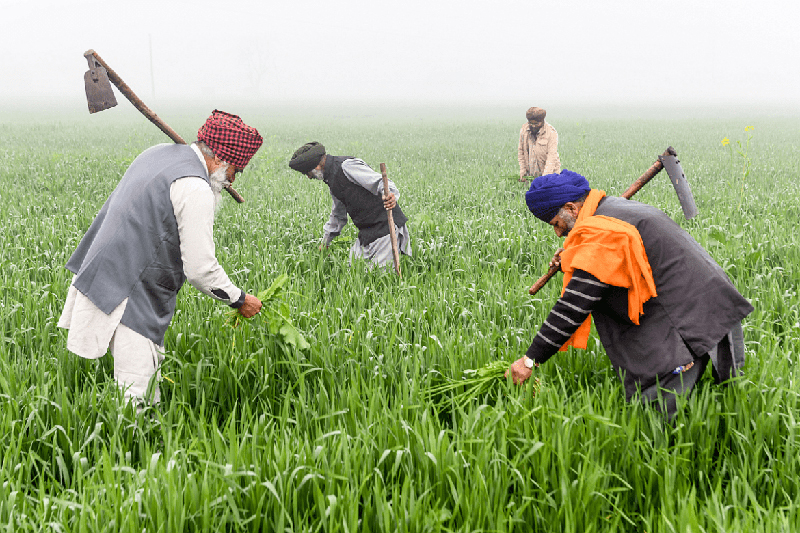
In a rapidly changing world, it is essential to adapt and evolve. The Green Revolution, which swept across the globe in the 1960s, brought with it new agricultural methods and a tremendous increase in crop production. As a recent study from Punjabi University Patiala highlights, these changes didn’t just impact agriculture – they set off a chain of cultural transformations that have shaped the lives of villagers in Punjab for the better.
The study, titled Punjabi Cultural Transformation after the Green Revolution, focuses on Bhotna village in Barnala district, where the researchers observed a positive shift in the socio-economic fabric of the community. Balwant Singh, the lead researcher, points out that the basis of this cultural transformation lies in the economic arrangement of the province’s socio-culture, which has been significantly impacted by the Green Revolution.
With agriculture as the main axis of Punjab’s economy, it is no surprise that new agricultural methods have had such a profound impact on the lives of the people. The study shows that Bhotna village has not only geographically embraced development but also socially evolved. The streets in the village are now paved, and 50% of the Jat families have transformed their old houses into modern kothis, showcasing the progress that has occurred in recent decades.
The cultural changes brought about by the Green Revolution have allowed villagers to enjoy an improved quality of life, with better infrastructure and living conditions. It is a testament to the adaptability and resilience of the Punjabi people, who have successfully navigated the challenges brought on by rapid change and emerged stronger for it.
While it is essential to preserve and cherish our cultural heritage, we must also recognize that change is inevitable. The story of Bhotna village serves as an inspiring example of how embracing change can lead to a brighter future. Let us take this lesson to heart, and continue to work towards a more prosperous and progressive Punjab.
Support Our Journalism
We cannot do without you.. your contribution supports unbiased journalism
IBNS is not driven by any ism- not wokeism, not racism, not skewed secularism, not hyper right-wing or left liberal ideals, nor by any hardline religious beliefs or hyper nationalism. We want to serve you good old objective news, as they are. We do not judge or preach. We let people decide for themselves. We only try to present factual and well-sourced news.
Support objective journalism for a small contribution.