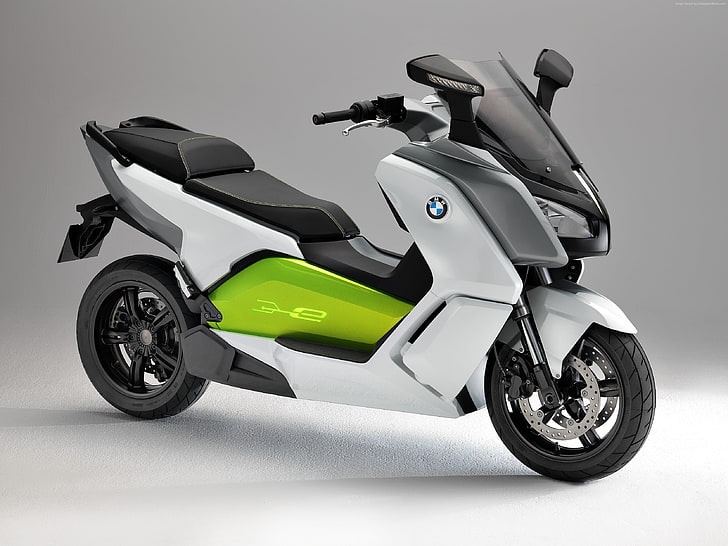
 Electric two-wheeler
NITI Aayog and TIFAC report predicts 72 pc penetration of electric two-wheelers by 2031
New Delhi: A hundred percent penetration of electric two-wheelers in the Indian market by FY 2026–27 is possible in an optimistic scenario while in a technology-driven scenario where current incentives are withdrawn by 2024, 72 percent penetration is likely by 2031, a NITI Aayog and TIFAC report has predicted.
The report titled ‘Forecasting Penetration of Electric Two-Wheelers in India’ was prepared by NITI Aayog and Technology Information Forecasting and Assessment Council (TIFAC) using a tool to develop eight scenarios for analyzing the future penetration of electric two-wheelers in the country.
During the launch of the report, NITI Aayog CEO Amitabh Kant said, “This report provides a much-needed tool to the industry, researchers, academicians, and policymakers to analyze and respond to various scenarios. It can be replicated easily in other segments too, such as four-wheelers, without any hassle.”
The eight scenarios considered are challenged diffusion, performance-driven, low battery cost, technology-driven, incentive-driven, battery cost challenged, the same performance and optimistic.
The future scenarios have been constructed on the basis of three major factors that influence the market penetration of electric two-wheelers: (i) demand incentives (ii) cost of battery (iii) vehicle performance in terms of both range and power.
Four broad constraint levels have also been identified for the eight scenarios, in terms of installed vehicle manufacturing capacity and available charging infrastructure: (i) full constraint (where both vehicle production and charging infrastructure are constraints) (ii) production constraint (where only vehicle production is a constraint) (iii) charge constraint (where only the charging infrastructure is a constraint) (iv) no constraint.
In the ‘Technology Driven’ scenario, if an R&D programme manages to enhance the range and power of electric two-wheelers by 5 percent annually between FY 2023–24 and 2025–26, and by 10 percent in FY 2026–2027, then the penetration of electric-two wheelers may reach about 72% in FY 2031–32—even with no extension of demand incentives.
The sale of electric two-wheelers may cross 220 lakh units in FY 2028–29 under the ‘Optimistic’, ‘Same Performance’ and ‘Battery Cost Challenged’ scenarios. It may reach 180 lakh units under the ‘Technology-Driven’ scenario. Under the ‘Incentive Drive’ scenario, the sale is expected to reach only 55 lakh units in FY 2031.
If there is sufficient installed capacity of electric two-wheelers and charging infrastructure, then sale (which finally reaches about 250 lakh units) may at some point even surpass the production under the ‘Optimistic’, ‘Same Performance’ and ‘Battery Cost Challenged’ scenarios.
The report provides important insights into the required infrastructure, manufacturing capability, policies, and technology-development priorities in the area.
The scenarios can be used by government agencies, the industry, and academic/R&D institutions for evidence-based analysis of policies, market scenarios and technology development strategies.
Support Our Journalism
We cannot do without you.. your contribution supports unbiased journalism
IBNS is not driven by any ism- not wokeism, not racism, not skewed secularism, not hyper right-wing or left liberal ideals, nor by any hardline religious beliefs or hyper nationalism. We want to serve you good old objective news, as they are. We do not judge or preach. We let people decide for themselves. We only try to present factual and well-sourced news.
Support objective journalism for a small contribution.