 Petrol-Diesel
Middle East crisis: Govt cuts excise duty by Rs 10 on petrol and diesel, giving big relief amid global oil shock
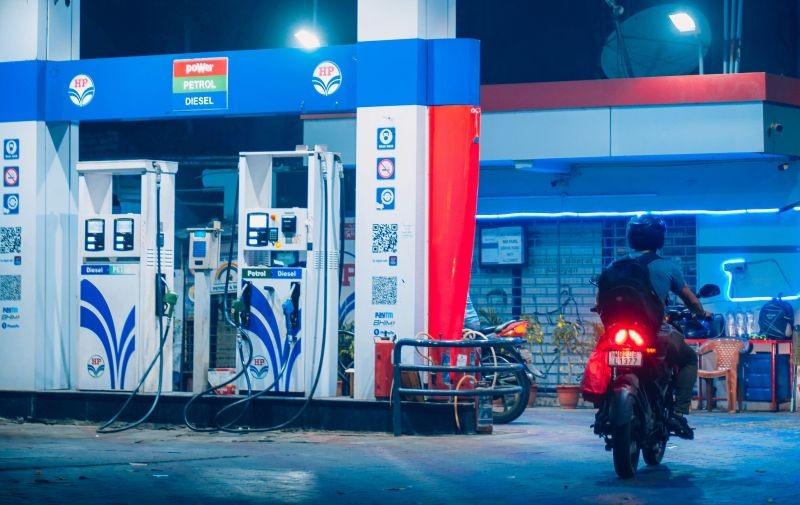
The Indian government on Friday slashed additional excise duty on petrol and diesel, offering relief to the countrymen amid the ongoing Middle East crisis.
As per a government order dated Thursday (March 26, 2026), the excise duty on petrol has been cut to Rs 3 per litre from Rs 13 per litre earlier, reported India Today.
Also Read: Talks are going very well: Donald Trump extends pause on striking Iranian power plants
This slash marks a reduction of Rs 10 per litre.
According to reports, the excise duty on diesel has been slashed to Rs 0 from Rs. 10 per litre earlier.
Speaking on the international fuel price situation, Indian Petroleum Minister Hardeep Singh Puri wrote on X: "International crude prices have gone through the roof in the last 1 month from around 70 dollars/barrel to around 122 dollars/barrel. Consequently, petrol and diesel prices for consumers have gone up all over the world. Prices have increased by around 30%-50% in South East Asian countries, 30% in North American countries, 20% in Europe and 50% in African countries."
International crude prices have gone through the roof in the last 1 month from around 70 dollars/barrel to around 122 dollars/barrel. Consequently, petrol and diesel prices for consumers have gone up all over the world. Prices have increased by around 30%-50% in South East Asian…
— Hardeep Singh Puri (@HardeepSPuri) March 27, 2026
He said: "Government has taken a huge hit on it taxation revenues to ensure very high losses of oil companies (approximately 24 Rs/litre for petrol and 30 Rs/litre for diesel) at this time of sky high international prices are reduced. At the same time, export tax has been levied as international prices of petrol and diesel have skyrocketed and any refinery exporting to foreign nations will have to pay export tax. My gratitude to Hon’ble PM Narendra Modi Ji and Hon’ble FM @nsitharaman Ji for this very timely, bold and visionary decision!"
The intensifying conflict in the Persian Gulf “has triggered one of the most rapid and severe disruptions to global commodity flows in recent times,” the Chief Economist with the UN Food and Agriculture Organization (FAO) said on Thursday.
The crisis is affecting agricultural production and food security worldwide, with impacts on farmers but also migrant workers, Máximo Torero told journalists at UN Headquarters in New York.
Also Read: Sensex drops 900 points at open amid West Asia tensions
“Temporality matters a lot right now and the clock is ticking very hard, and I think we need to find a solution as soon as possible,” he said via videoconference from Rome.
‘Double shock’ for farmers
Since the war erupted, tanker traffic in the Strait of Hormuz has declined by more than 90 per cent.
Normally, 35 per cent of global crude oil flows – 20 million barrels – along with 30 per cent of fertilizer trade, and a fifth of liquefied natural gas passes through the critical maritime corridor each day.
As a result, farmers are facing “a double shock” brought on by rising prices for fertilizer and fuel, both key for agricultural production.
Support Our Journalism
We cannot do without you.. your contribution supports unbiased journalism
IBNS is not driven by any ism- not wokeism, not racism, not skewed secularism, not hyper right-wing or left liberal ideals, nor by any hardline religious beliefs or hyper nationalism. We want to serve you good old objective news, as they are. We do not judge or preach. We let people decide for themselves. We only try to present factual and well-sourced news.
Support objective journalism for a small contribution.