India shifts into high gear in global auto parts supply under ‘China+1’ strategy
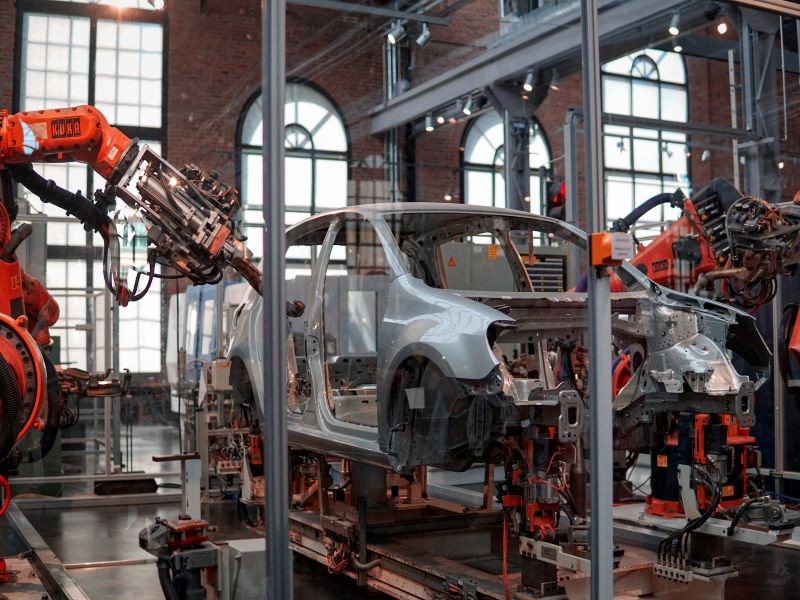
New Delhi: India is emerging as a pivotal player in the global automotive supply chain, as multinational automakers adopt the "China + 1" strategy to diversify operations and reduce dependence on China. According to a joint report by EY and Parthenon, the country is fast becoming a preferred hub for manufacturing and exporting auto components.
The "China + 1" approach began as companies sought an additional base alongside China to lower risks in their supply chains, Hindustan Times reported, citing the study.
Rising manufacturing costs, geopolitical tensions, and trade uncertainties are pushing firms to spread production beyond China.
The EY–Parthenon report highlights that competitive production costs and government-backed incentives are driving India’s rise in the global auto component market.
The Production-Linked Incentive (PLI) scheme for the sector—offering 8–18 per cent sales-linked incentives for advanced and electric vehicle components—has been a major catalyst.
While policy support and cost advantages are strong draws, experts caution that Indian firms must scale up investments in research and development to fully capitalise on the opportunity. Former NITI Aayog CEO Amitabh Kant, speaking at an industry event in May, stressed the importance of “technology leapfrogging” over copying existing Chinese methods.
"You can't copy the Chinese. You have to beat the Chinese with one up. This game of China plus one by importing from China all the time will never work," Kant said, warning that over-reliance on imports would undermine growth under the China+1 framework.
Chief Economic Adviser Anantha Nageswaran pointed to India’s political stability, growing domestic market, skilled workforce, and rising income levels as factors that strengthen its appeal as a manufacturing base.
Combined with the global shift towards diversified supply chains, these factors are laying the groundwork for India’s long-term standing in the auto components sector.
Industry observers note that India’s ascent as a major export destination for auto parts will depend on its ability to advance technology, maintain cost competitiveness, and deliver consistent quality as global OEMs realign their sourcing strategies.
Support Our Journalism
We cannot do without you.. your contribution supports unbiased journalism
IBNS is not driven by any ism- not wokeism, not racism, not skewed secularism, not hyper right-wing or left liberal ideals, nor by any hardline religious beliefs or hyper nationalism. We want to serve you good old objective news, as they are. We do not judge or preach. We let people decide for themselves. We only try to present factual and well-sourced news.
Support objective journalism for a small contribution.