Income Tax Act, 2025 to take effect from April 1, 2026
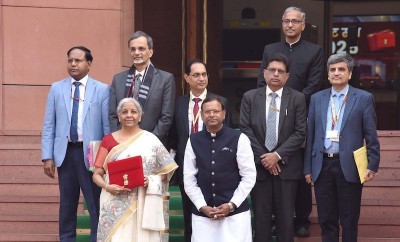
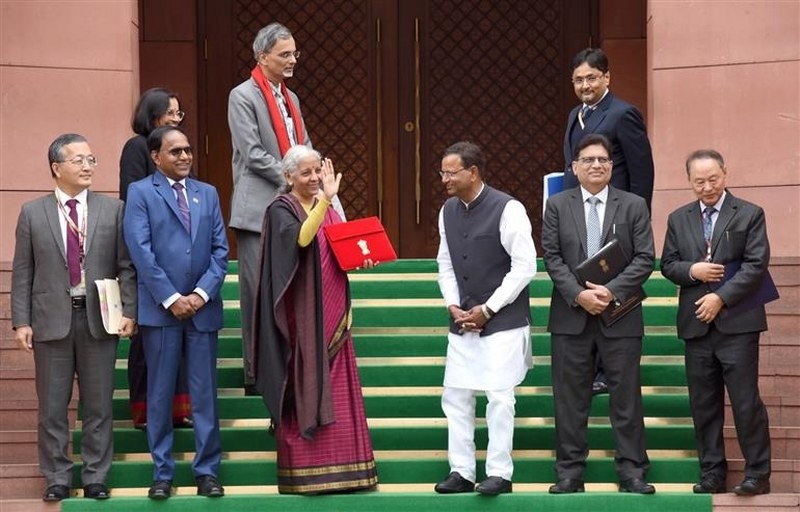
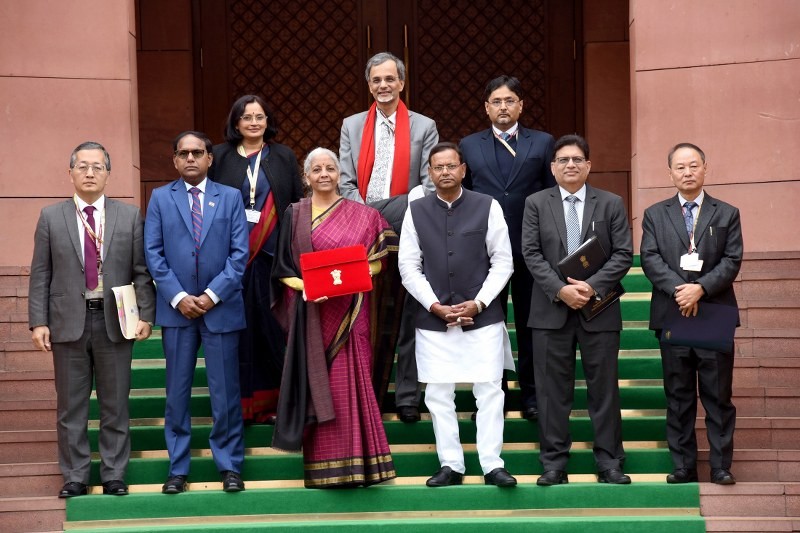
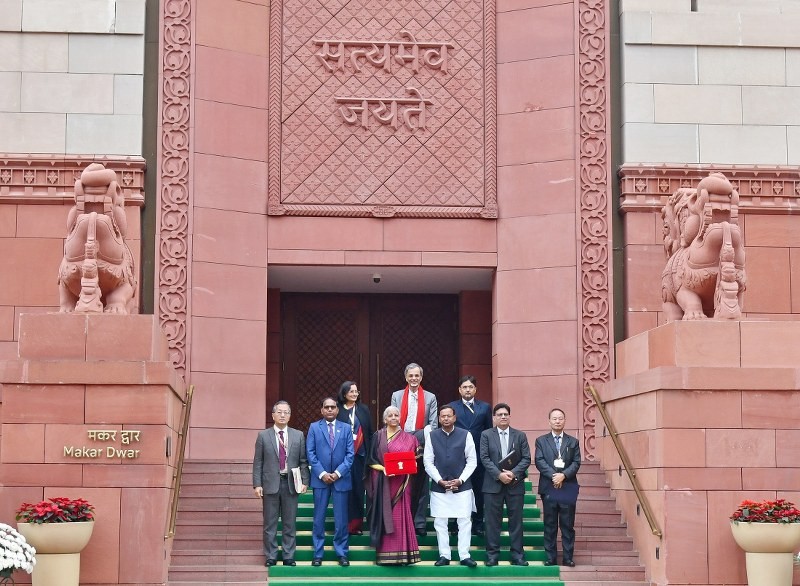
New Delhi/IBNS: The Union Budget 2026–27, presented in Parliament on Saturday by Union Minister of Finance and Corporate Affairs Nirmala Sitharaman, proposed a series of direct tax reforms aimed at simplifying the tax regime, improving compliance and sustaining the momentum of structural reforms.
The Finance Minister said the measures reflect the government’s emphasis on “Kartavya” while continuing efforts to make India’s tax system simpler and more transparent.
The Income Tax Act, 2025 is proposed to come into force from April 1, 2026. Simplified income tax rules and redesigned return forms will be notified separately, giving taxpayers adequate time to familiarise themselves with the new law. The government said the revised forms have been structured to ensure easier understanding and compliance for ordinary citizens.
As part of tax administration reforms, Sitharaman proposed the constitution of a joint committee of the Ministry of Corporate Affairs and the Central Board of Direct Taxes to incorporate the requirements of Income Computation and Disclosure Standards into Indian Accounting Standards. With this integration, separate accounting requirements based on ICDS will be discontinued from the tax year 2027–28.
In line with the Prime Minister’s vision of building globally competitive Indian accounting and advisory firms, the Budget also proposed rationalising the definition of accountant for the purposes of Safe Harbour Rules.
To curb the improper use of share buybacks for tax arbitrage, the Budget proposed taxing buybacks as capital gains for all categories of shareholders. Promoters will be subject to an additional buyback tax, taking the effective tax rate to 22 percent for corporate promoters and 30 percent for non-corporate promoters.
The Budget also announced rationalisation of Tax Collected at Source rates. TCS on sellers of alcoholic liquor, scrap and minerals will be reduced to 2 percent, while TCS on tendu leaves will be cut from 5 percent to 2 percent.
Under the Liberalised Remittance Scheme, TCS on remittances exceeding ₹10 lakh will be 2 percent for education and medical treatment, and 20 percent for purposes other than education and medical treatment.
The Finance Minister also proposed an increase in Securities Transaction Tax on derivatives. STT on futures will be raised to 0.05 percent from the current 0.02 percent, while STT on options premium and exercise of options will be increased to 0.15 percent from 0.1 percent and 0.125 percent, respectively.
To encourage companies to shift to the new corporate tax regime, set-off of brought forward Minimum Alternate Tax credit will be allowed only under the new regime, capped at one-fourth of the tax liability.
From April 1, 2026, MAT is proposed to be made a final tax, with the rate reduced to 14 percent from the existing 15 percent. MAT credit accumulated up to March 31, 2026 will continue to be available for set-off under the proposed limits.
Support Our Journalism
We cannot do without you.. your contribution supports unbiased journalism
IBNS is not driven by any ism- not wokeism, not racism, not skewed secularism, not hyper right-wing or left liberal ideals, nor by any hardline religious beliefs or hyper nationalism. We want to serve you good old objective news, as they are. We do not judge or preach. We let people decide for themselves. We only try to present factual and well-sourced news.
Support objective journalism for a small contribution.