Food price index starts 2016 dropping to nearly 7-year low - UN agency
FAO's Food Price Index is a trade-weighted index tracking international market prices for five key commodity groups: major cereals, vegetable oils, dairy, meat and sugar. It averaged 150.4 points in January, down 16 per cent from a year earlier and registering its lowest level since April 2009.
The main factors underlying the lingering decline in basic food commodity prices are the generally ample agricultural supply conditions, a slowing global economy, and the strengthening of the United States dollar, the UN agency noted in a news article.
This month, FAO also raised its forecast for worldwide cereal stocks in 2016, as a result of lowering its projected consumption and raising 2015 production prospects.
The FAO Sugar Price Index fell 4.1 per cent from December, its first drop in four months, as crop conditions improved in Brazil, by far the world's leading sugar producer and exporter.
The Dairy Price Index dropped by 3.0 per cent on the back of large supplies, in both the European Union (EU) and New Zealand, and torpid world import demand.
FAO's Cereal Price Index declined 1.7 per cent (to 149.1 points) amid ample global supplies and increased competition for export markets, especially for wheat and maize, as well as a strong US dollar.
The Vegetable Oil Price Index dropped 1.7 per cent, mainly because of a decline in soy oil prices reflecting expectations of ample global soybean supplies.
Finally, the Meat Price Index moved 1.1 per cent lower than its revised December value, with prices of all meat categories falling, except pig meat, which was sustained by the opening of private storage aid in the EU.
Meanwhile, weather patterns associated with El Niño are sending mixed signals about the early prospects for cereal crops in 2016, especially in the Southern Hemisphere, according to FAO's Cereal Supply and Demand Brief, also released today.
It notes that 2016 crop prospects have been "severely weakened" in Southern Africa, and a 25 per cent cut in wheat production in South Africa now appears likely. Conditions for the crop are generally favourable in the Russian Federation and the EU, but winter plantings declined in the United States and Ukraine. The area under wheat is also expected to be cut in India, following a poor monsoon and below average rains since October.
The 2016 outlook for rice along and south of the Equator is "dim" due, at times, to insufficient water and, at others, to excessive rains.
As for the 2015 season, FAO modestly raised its forecast for world cereal production to 2,531 million tonnes, up slightly from that released in December.
Wheat output in Canada and Russia and maize output in China, Canada and Paraguay drove the upward revision. FAO also slightly raised its expectation regarding 2015 world rice production, mostly on account of higher forecasts for China, Viet Nam and the United States.
At the same time, FAO lowered its forecast for world cereal utilization in the 2015/16 season to 2,527 million tonnes, which remains 0.8 per cent above that of the previous year. This reflects a 2.0 per cent increase for wheat, largely on account of higher livestock feed use in developed countries and a 0.3 per cent increase in maize. World rice utilization is projected to expand by 1.1 per cent, keeping world per-capita consumption stable.
As a result of the upgraded production and downgraded consumption forecasts, world cereal stocks are set to end the 2016 seasons at 642 million tonnes, higher than they began. That level implies a steady and comfortable global cereal stock-to-use ratio of around 25 per cent. However, the inventory build-up varies geographically and depending on the crop.
Notable increases in wheat inventories are forecast for the US, EU and China whereas some reductions are likely in Canada, India and Iran. On the other hand, world rice stocks would need to be drawn down to bridge the expected gap between world production and consumption, with much of the release likely to concern India and Thailand, the two leading rice exporters.
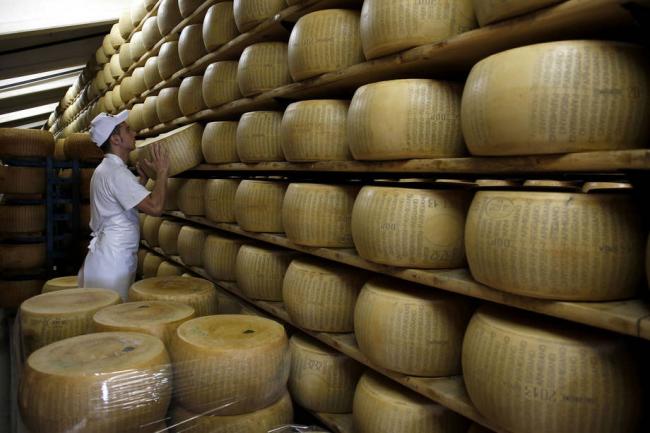
Photo: FAO/Alessia Pierdomenico
Support Our Journalism
We cannot do without you.. your contribution supports unbiased journalism
IBNS is not driven by any ism- not wokeism, not racism, not skewed secularism, not hyper right-wing or left liberal ideals, nor by any hardline religious beliefs or hyper nationalism. We want to serve you good old objective news, as they are. We do not judge or preach. We let people decide for themselves. We only try to present factual and well-sourced news.
Support objective journalism for a small contribution.