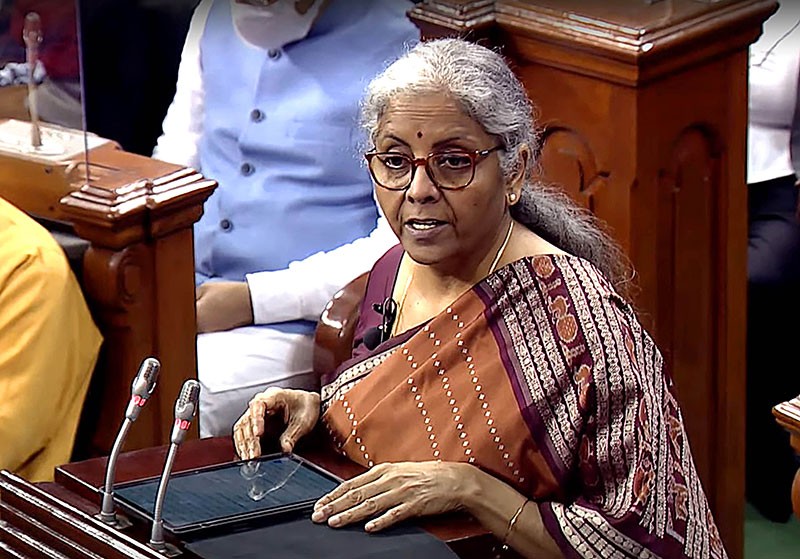
Finance Minister Nirmala Sitharaman tables IBC overhaul bill in Lok Sabha
New Delhi: Nearly eight years after the Insolvency and Bankruptcy Code (IBC) promised a clean break from India’s sluggish bankruptcy regime, Finance Minister Nirmala Sitharaman on Tuesday unveiled an amendment bill in the Lok Sabha designed to put speed, value and governance back at the heart of the process.
Bill objectives and scope
The bill seeks to reduce procedural delays, maximise value for all stakeholders, and strengthen the governance of processes under the Code.
Key proposals include faster admission of insolvency cases, an out-of-court mechanism for “genuine business failures”, and frameworks for group and cross-border insolvency.
Introduced in 2016 to rescue and reorganise distressed companies through a time-bound process, the IBC has fostered credit discipline but struggled with delays, personnel shortages, and deviations from its founding principles.
Critics point to backlogs, prolonged admission and resolution timelines, and steep creditor haircuts. In response, the new amendment bill—now referred to a select committee for consultations—aims to bring the process in line with global best practices while making it swifter and more effective.
Tightening admission rules for insolvency cases
A major change is that insolvency applications by financial creditors “must” be admitted if the default is proven, procedural compliance is met, and there are no disciplinary proceedings against the resolution professional.
Default would be the sole ground for consideration, with financial institution records serving as conclusive proof.
While the National Company Law Tribunal (NCLT) is supposed to decide admissions within 14 days, cases often take months—an average of 434 days.
The bill mandates strict enforcement of the 14-day limit, requiring written reasons for any delay.
Out-of-court resolution for genuine failures
The proposed creditor-initiated insolvency resolution process (CIIRP) offers an out-of-court option for genuine business failures.
It would require approval from creditors holding at least 51% of a debtor’s outstanding debt.
The debtor could continue operations under the supervision of a resolution professional with veto powers, and the process would be limited to 150 days.
If unsuccessful, the case could move into the standard corporate insolvency resolution process (CIRP).
Group and cross-border insolvency frameworks
A group insolvency framework has also been proposed to coordinate proceedings for companies within the same corporate group, minimising value loss from fragmented cases.
This could allow a common resolution professional, joint committee of creditors (CoC), and shared timelines.
The cross-border framework would align India with international norms, help recover overseas assets, and boost investor confidence by improving recognition of India’s insolvency process abroad.
Strengthening liquidation oversight
Other provisions empower the CoC to supervise liquidation, replace liquidators with a 66% vote, extend CIRP moratorium benefits to liquidation, and even restore CIRP once to rescue viable companies.
The CoC could directly dissolve entities with negligible assets and retain or appoint the resolution professional as liquidator.
Additional safeguards and clarifications
The bill also broadens the definition of resolution plans to include asset sales, tightens rules on appointment of resolution professionals, restricts withdrawal of CIRP applications at certain stages, and allows avoidance proceedings to continue after resolution.
It removes the interim moratorium for personal guarantors, adds safeguards against fraudulent transactions, and clarifies the priority of government dues.
If enacted, the amendments promise to address long-standing bottlenecks, restore the Code’s original intent, and position India’s insolvency regime closer to global standards.
Support Our Journalism
We cannot do without you.. your contribution supports unbiased journalism
IBNS is not driven by any ism- not wokeism, not racism, not skewed secularism, not hyper right-wing or left liberal ideals, nor by any hardline religious beliefs or hyper nationalism. We want to serve you good old objective news, as they are. We do not judge or preach. We let people decide for themselves. We only try to present factual and well-sourced news.
Support objective journalism for a small contribution.